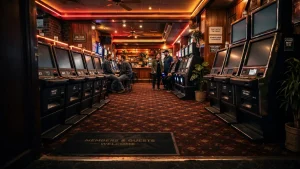
Free play shows Big Red’s presentation and pace, but random results offer no forecast of cash play.
Trying Big Red in free play can tell you what the game feels like to use. You can get familiar with the screen, see how the controls respond and decide whether the pace holds your attention. That is useful information. It is not a preview of what a later session will produce.
I used to treat a run of free spins like a hint. A few results went my way, and I’d start thinking I had caught the game in a generous mood. Then a different session would feel nothing like it. The mistake was not in trying the game; it was in reading a pattern into a small run of random results.
A free session is best treated as a look around. You can see how the reels move, whether the display is easy to follow and how the game signals that something has happened. You can also get a sense of whether you enjoy its pace and presentation. Those are observations about the experience in front of you—not evidence that the next spin, or a later session, is due to go a particular way.
That distinction matters with free Big Red pokies because a sample can feel more meaningful than it is. A cluster of wins looks like a trend. A long stretch without one can feel like the game is building towards a reward. Neither impression changes the next result. Each pokie spin is determined by a Random Number Generator, and each spin is an independent random event. The result you just saw does not set up, improve or rule out the next one.
Free play can still answer practical questions about whether you want to keep looking at a game. Maybe the animations feel too busy, the sound gets irritating, or the buttons are straightforward. Maybe you like the visual style. Those are fair reasons to decide whether the experience suits you. They just don’t tell you how the game will behave later.
I find it helps to separate what I can actually notice from what my brain wants to claim. “That was a good run” describes what happened during that run. “The next one should be good” is a prediction, and the first statement doesn’t support the second. The same goes the other way: an unremarkable free session doesn’t prove that another session will be the same.
Free-play results can also make time pass without you noticing. When you are focused on the screen, a short stretch of spins can feel like enough to understand the game. It may show you the basic rhythm, but it cannot turn a random process into a dependable pattern. More spins give you more results to look at; they still do not make a previous result a signal for the next one.
So, if you open free online pokies to get a feel for Big Red, keep the purpose modest. Notice the interface, the pace and whether you find the presentation enjoyable. Don’t use a lucky streak as proof that the game is about to keep paying, or a dry patch as proof that a win is now owed. Random results do not keep score in the way we do.
That is an easy trap because games present each result clearly, while the uncertainty behind the next one is less visible. We remember a sequence that seems to tell a story and overlook how little it can say about what comes next. I’ve done that myself. It made a free session feel like a test I could pass, when all I had really seen was one set of outcomes.
Think of free play as a chance to learn the feel of a game, not to learn its future. It can help you decide whether you like the look and rhythm of the experience. It cannot show that a later result is waiting, or that what happened before will repeat.
A useful check is to describe the session without adding a forecast: “I saw these results, and I liked—or didn’t like—the way the game played.” Once the description turns into “therefore I know what comes next”, you have gone beyond what the session can tell you. Keep the observation. Drop the prediction.
If you’re looking for Big Red pokies online in Australia in 2026, check the operator details that matter to you before choosing a site. This list highlights the limited verified information available for each entry.
Golden Pokies
Golden Pokies lists a Curaçao licence. No other operator details are provided here, so check the site directly for information relevant to you.
Rollero Casino
Rollero Casino lists Curaçao Gaming Control Board licence OGL/2023/176/0095, held by Hollycorn N.V. This gives you a specific licence reference to check.
Uptown Pokies
Uptown Pokies is described as operating since 2017 under a Curaçao licence, with a minimum deposit of A$20. These details may help you assess whether it suits your preferences.
SkyCrown
SkyCrown lists a Tobique Gaming Commission licence and a minimum deposit of A$30. Its stated payout times are around 10–15 minutes for crypto and 1–5 days for fiat.
Thor Casino
Thor Casino lists a Curaçao licence associated with Antillephone N.V. and Versus Odds B.V. Its stated minimum deposit is EUR 20.
SpinsUp
SpinsUp lists Curaçao Gaming Control Board licence OGL/2023/174/0082, held by Dama N.V. You can use that reference when checking its licensing details.
7Bit Casino
7Bit Casino is described as operating under a Curaçao licence, with Dama N.V. named as its operator. No deposit or payout details are provided here.
Roby Casino
Roby Casino lists a Curaçao eGaming licence associated with Roby Games Ltd. That is the available operator detail to consider.
Lucky Dreams
Lucky Dreams lists a Curaçao licence and accepts POLi deposits from A$20. The stated payment method and minimum may be useful if you plan to deposit through POLi.
House of Pokies
House of Pokies lists an international iGaming licence, though its jurisdiction is not named in the source. PayID deposits start at A$10, with a stated minimum deposit of A$30, and PayID payouts take 1–24 hours.
The name of a pokie does not change the rules around where it is offered. Under the Interactive Gambling Act 2001, companies cannot provide real-money online pokies to people in Australia without a domestic licence. No domestic licences for online casinos have been issued, so there is no Australian-licensed online casino.
That distinction matters. The law is aimed at operators offering the service, not at individual players. Australians are not made criminally liable simply for playing on an offshore site that accepts them. I used to hear “it’s legal” and take that as reassurance about the whole experience. It is not. A player’s position under the law and the protections available from a local casino regulator are separate questions.
The key point is that there is no local online-casino licence to check. An offshore site may describe itself as licensed somewhere else, but that does not make it licensed in Australia or turn it into an Australian-regulated casino. Nor does a familiar game name, Australian-facing wording, or a payment option establish domestic approval.
The Australian Communications and Media Authority (ACMA) is the main domestic regulator enforcing the Interactive Gambling Act. Its work includes blocking access to illegal offshore gambling sites, and internet service providers must comply with ACMA’s blocklist.
A block is not the same thing as proof that every offshore site is inaccessible at every moment. It does show that access is actively restricted; it would be misleading to present offshore services as simply part of a normal local casino market. I would not treat a page loading, or a site accepting an Australian visitor, as evidence that the service has Australian approval.
The law’s target remains the operator providing prohibited gambling services to people in Australia. That is the part people often blur when they see a warning about illegal online casinos. It does not mean the player faces the same legal consequences as the company offering the service. Keep those positions distinct.
BetStop is a self-exclusion register for Australian-licensed gambling operators. It applies to Australian-licensed operators and does not bind offshore sites. Since no Australian-licensed online casino exists, signing up to BetStop should not be mistaken for a way to block access to every offshore pokie site.
That limit is easy to overlook because the name can sound broader than its actual reach. If you have excluded yourself through BetStop, do not assume that an offshore site will automatically know about it or honour it. The register’s protections do not extend to operators outside the Australian licensing system. It is a specific safeguard, not a universal web filter.
This also means that a reference to BetStop is not a stamp of approval for any online casino. It does not verify a site, establish that it follows Australian rules, or make an offshore operator subject to the register. Small distinction. Big difference.
The legal age for gambling in Australia, including online pokies, is 18. That age rule does not create a lawful domestic online-casino market: the absence of Australian-licensed online casinos remains the central point. Being old enough to gamble is not the same as having an Australian-licensed service available.
Legal Status
No domestic licences for online casinos have been issued, meaning there is no Australian-licensed online casino.
The relevant legal frame concerns people physically located in Australia and companies providing real-money online casino games to them. “Australian” branding or a game title such as Big Red does not determine the operator’s legal status. What matters is who is providing the service, where the player is located, and whether the operator has the required domestic licence. In this market, that licence has not been issued to any online casino.
I find it useful to separate three ideas that advertising and casual conversation can mash together: a player is not the law’s target in the same way as an operator; offshore access does not amount to Australian licensing; and a local exclusion scheme does not automatically reach offshore services. None of those points turns an offshore casino into a protected local option.
So if you see “Big Red” described as available online in Australia, read the location wording carefully. It may refer to a site accessible to Australians, not an Australian-licensed casino. The distinction is not a technicality. It is the difference between being able to reach a service and that service being authorised and regulated as a domestic online casino.
The button makes a real-money game look simple: tap, spin, wait for the result. The difficult part can start later, when you try to withdraw. I’ve learned not to treat a balance shown on a screen as money safely in my hands. A displayed win and a completed payout are not the same thing.
For Australians, there is a serious practical gap if an offshore casino refuses to pay: you have no legal recourse in Australia to make it honour the withdrawal. That is not the same as saying every site will withhold winnings. It means that if a dispute happens, you cannot rely on a local legal process to recover the money. The risk sits behind the bright interface, out of sight while you’re playing.
I used to think the sensible time to investigate withdrawal conditions was after a win. That is backwards. Before staking money, look for the operator’s withdrawal rules and identity-check requirements. If the terms are difficult to find, unclear, or inconsistent, that uncertainty matters. A polished page does not settle what will happen when you ask for your balance.
A specialist review reports that casinos may require identity checks before a first withdrawal. The requested documents can include a photo of your identity document and proof of your address; in some cases, you may also be asked for a selfie holding your ID. Treat this as something to check before depositing, not a surprise to deal with after a win.
There is a practical reason to be prepared: the casino may ask you to provide documents before it processes the first cash-out. Read its instructions carefully, and make sure you understand what documents it expects and how it wants them submitted. Don’t assume that creating an account means your identity has already been verified for withdrawals.
I’ve been guilty of reading only the attractive parts of a page and telling myself I’d sort out the details later. Later tends to arrive when you’re emotionally invested in getting the money out. That is a poor moment to discover that the process is more involved than you expected. Boring, but important.
Verification also means handing over sensitive personal information. Think about whether you are comfortable doing that, and whether you can understand the operator’s stated process before you share anything. A request for documents is not proof that a casino is safe or that it will pay. It is a requirement to understand and assess, not a promise of protection.
There are two different questions here. First: what documents could be needed before a withdrawal? Second: what can you do if a dispute arises and the operator does not pay? Being ready for identity and address checks may help you complete the requested process, but it does not give you a local remedy if the casino refuses to release winnings.
That distinction is easy to miss when you’re focused on a game. I’ve made the mistake of treating a smooth sign-up and a clear account balance as reassurance about everything that follows. They only tell you that those parts of the experience worked. They say nothing conclusive about a later dispute.
If you’re weighing real-money play, put the withdrawal route and the consequences of a disagreement on the same mental checklist as the amount you could lose. Don’t count winnings as yours to spend until they have actually reached you. And don’t let a request for paperwork blur the bigger point: documents can be checked; local recourse for an unpaid offshore withdrawal is not available. That’s the part worth remembering before the button.
When you play Big Red pokies, it is easy to treat the screen like it is leaving clues. A few losses can feel like a win must be close; a run of wins can look like proof that the game is “hot”. I have caught myself making both arguments, depending on which one suited me at the time. Neither tells you what the next spin will do.
A pokie uses a Random Number Generator, or RNG, to determine the result of each spin. The important part is that spins are independent events. The result on the screen does not make the next result due, less likely, or more likely. A sequence can look meaningful to us without carrying a message about what comes next.
That can feel counterintuitive because people naturally look for patterns. If the same symbol has appeared several times, it is tempting to think it is on a run. If it has not appeared for a while, it can seem overdue. But a spin does not remember the previous one. The machine’s recent history is not a promise, a warning, or a countdown.
I used to read a losing streak as evidence that the game had to turn around. Then, after a win, I would tell myself I had found the rhythm. Those explanations made the results feel more orderly than they were. They also gave me a reason to keep going when I had no real basis for expecting the next spin to be different. That was my mistake.
RNG
Each pokie spin is determined by a Random Number Generator, making every spin an independent random event.
The same goes for a single memorable result. A big payout may stick in your mind, while ordinary spins blur together. Remembering the dramatic moment can make it feel like the game often produces that kind of outcome. But one result, or even a run of results, cannot establish what another spin will bring. It is just the sequence you happened to see.
This matters when you decide whether to press spin again. Looking at the last result cannot improve your read of the next one. Waiting for a particular symbol, chasing a near miss, or changing your expectations after a win does not turn past outcomes into a forecast. The next spin remains its own random event.
“Due” is a persuasive word. It sounds like the game has an account to settle. It does not. The RNG determines each spin separately; a result that has not appeared is not owed to you, and a result that has just appeared does not signal that it will repeat. The screen can make a sequence feel like a story, but the story is something we add.
So if you are deciding how to approach Big Red, keep the question plain: are you comfortable with not knowing what the next spin will show? There is no pattern in the recent results that can answer that for you. I find it helps to notice when I start inventing one, especially when I am trying to justify another spin.
A spin can show you its own result. It cannot explain the next one. That is the limit.
Playing Big Red without staking your own cash can sound simple: spin, see what happens, and keep anything you win. The part I learned to check is the last one. A balance shown on screen is not automatically money you can withdraw. It may be demo credit, or it may come from a free-spin offer with conditions attached. Those are different things, even when the game looks exactly the same.
In a demo, the credits are there to let you play; they are not a cash balance. A displayed win can make the session feel more substantial than it is, but it does not turn those credits into withdrawable funds. I used to focus on the number climbing and leave the terms for later. That was backwards. If you are trying a free version of Big Red, first work out whether it is simply a demo or a promotion that describes winnings as eligible for cash-out.
Free spins can have their own rules. One specialist casino review reports that an offer may place a cap on how much of its winnings can be cashed out. That is a possible condition, not a rule to assume applies to every offer. It also means a large-looking win on the screen might not equal the amount you can ultimately withdraw. The details depend on the offer’s terms, so read those before treating a promotional balance as cash.
“Free” is the word that catches my eye, too. But it can describe the spins, not the outcome. It does not, by itself, explain what happens to winnings, whether any amount is eligible for withdrawal, or whether a cap applies. If those points are unclear, the sensible move is to pause rather than fill in the gaps with the most hopeful interpretation.
Using non-cash credits to see how the game feels without staking money.
An offer where terms determine how winnings are handled and if a cap applies.
Funds that the operator specifically permits you to withdraw.
I’d separate the possibilities like this: demo play is for playing with non-cash credits; free spins are an offer whose terms determine how winnings are handled; and a cashable balance is money the operator permits you to withdraw. Seeing one does not prove you have the next. The labels can be easy to skim past when you are keen to start. I’ve done that. Then I had to go back and read the conditions properly.
Before claiming or using an offer, look for wording about cash-out eligibility and any cap on winnings. Check whether the displayed amount is promotional credit or a balance described as withdrawable. If the terms do not make that distinction clear, do not assume that a win shown during free play will be paid out. A screenshot of the result does not replace the offer conditions.
There is also a difference between enjoying a no-stake session and judging it by the balance on screen. If your aim is simply to see how the game feels, demo play can do that without making the session a cash decision. If your aim is to receive withdrawable winnings, the offer’s conditions matter more than the word “free.” That is the bit I now check first.
So, yes, you can look for a way to play without staking cash. Just keep the meaning narrow: playing without a cash stake does not automatically mean that any win is cashable. With free-spin offers, a cap may apply, and the terms are where that possibility should be checked. Fun on screen. Not necessarily money out.
A demo can show you how a pokie looks and behaves on screen, but it cannot, by itself, tell you which return-to-player setting is in use at another casino. That distinction is easy to miss. I’ve been tempted to treat a familiar-looking game as if it must be the same version wherever it appears. Same name, same reels, same soundtrack — surely the same settings? Not necessarily.
A specialist review reports that some game providers allow casinos to choose between different RTP settings for a given pokie. RTP is the theoretical share of stakes a game is designed to return over a very large number of plays. If a provider makes more than one setting available, the same game can have different return percentages at different casinos.
That does not mean every pokie has selectable settings, or that every casino uses a different one. It means a demo at one venue cannot establish the RTP setting used elsewhere. Even when the screens seem identical, appearance alone does not answer the settings question.
There’s a second wrinkle: a demo session is a sample, not a measurement of a game’s long-run return. A short run can look unusually generous or unusually cold without telling you the RTP. That figure describes a theoretical return over extensive play, not a promise about what you will see in a session. A lively demo isn’t proof of a higher setting. A quiet one isn’t proof of a lower setting.
RTP Settings
Some providers allow casinos to choose between different RTP settings, so a demo cannot confirm the setting used at another casino.
So when you try a Big Red demo, keep the conclusion modest: you’ve seen that version running in that demo environment. You haven’t confirmed the return setting that may apply at another casino, and the session itself can’t establish a theoretical percentage. I used to read too much into a handful of spins. It felt like research. It wasn’t.
If the RTP matters to you, look for a clearly stated setting tied to the specific game and casino, rather than inferring it from a demo’s feel or presentation. If the setting is not identified, don’t fill the gap with a guess. “Same game” describes what you recognise on screen; it doesn’t necessarily tell you which return configuration is behind it.
Small distinction. Big enough.
When you look at Big Red pokie games, the title or familiar artwork does not tell you which return setting is in use. Some providers allow a casino to choose between multiple RTP settings for the same pokie. So one version of a game can be configured differently from another casino’s version, even when the game looks the same to you.
A specialist review reports this kind of provider choice. That is a useful distinction, but it does not establish which setting any particular casino uses. I used to treat a game’s name as if it came with one fixed return figure everywhere. It doesn’t necessarily work that way. Same look, different setting.
RTP is a long-run measure, not a promise about what you will get back in a session. Even when a setting is known, it cannot tell you how a short run of spins will go. And seeing the same game in two places does not show that both are running the same return configuration.
That makes comparisons trickier than the lobby tiles suggest. A listing can identify a pokie without telling you its configured RTP. If a casino does not clearly state the setting, don’t fill that gap with an assumption based on the game’s name, artwork or a figure seen elsewhere. A number attached to the game in one place may not describe the version offered somewhere else.
I’d separate two questions: which game is being offered, and which RTP setting is attached to that version. The first may be obvious from the title. The second needs specific information about that casino’s configuration. A general description of a provider’s options is not confirmation of the setting selected for a particular game.
That’s the catch with game variations: the visible version may look familiar, while the return setting can differ. It is worth treating claims about a specific setting as casino-specific, rather than carrying them across every listing for the same pokie. And none of those settings turns the next spin into a forecast.
A “download” label can sound more official than it is. It tells you how a page is presenting something, not who made it or whether it belongs to the game provider. I’ve learned to separate the word on a button from what that button actually leads to. With a Big Red pokie, I wouldn’t treat a file, app listing or mobile-play claim as proof of an official product.
Downloading software is different from browser play; files can request access to your device or personal information, and polished app listings do not guarantee official origin.
That distinction matters because downloading software is different from opening a game in a browser. A file can ask for access to your device or personal information, and an app listing can look polished without answering who is responsible for it. Don’t install something just because its name resembles a game you recognise. If you cannot establish what it is and where it comes from, leaving it alone is the sensible call.
No need to force a download into the picture. A claim about an app or a mobile-specific feature should stand on its own, rather than being accepted because a page uses familiar branding. I’m wary of confident wording that skips over the basic question: what, exactly, are you being asked to install? A vague answer is a reason to pause, not a reason to click through.
And none of that changes how a spin works. The game’s Random Number Generator selects the result for each spin as a separate random event. Installing software, opening a game on a phone or using a desktop does not make one spin a clue to the next. The interface may change; the randomness does not become a pattern you can read.
That’s the useful line to keep in mind: download claims are about software and its source, while a spin’s result is about random number generation. Neither a familiar-looking icon nor a run of wins tells you that a particular file is official. I’d rather leave an uncertain download untouched than let a neat label do the thinking for me. No magic button.
The words “Big Red Kangaroo” sound like they should point to one particular pokie, with a recognisable animal character and a set of features you could check. I wouldn’t treat the name alone as proof of that. I can’t confidently identify a specific kangaroo-themed game or describe its symbols, bonus rounds, sound effects, or paytable. Making those details up would turn a hunch into a claim.
That distinction matters when a title feels familiar. A game name, a picture of a kangaroo, or a few words on a page may suggest a particular product, but suggestion is not confirmation. I’ve learned to be wary of filling in blanks just because something sounds plausible. A vivid image can stick in your head; it still doesn’t tell you what the game actually does.
There is one point I can say plainly about pokies in general: the outcome of a spin is generated at random, independently of the result before it. A run of wins, a quiet patch, or a particular symbol appearing does not establish what the next spin will show. That remains true whether a pokie is described as Australian-themed, linked with a kangaroo, or given another name altogether.
Nothing to read into it.
So if you came across a reference to a Big Red Kangaroo pokie, keep the claim modest: the wording suggests a kangaroo connection, but it does not let me confirm a particular title or its features. I wouldn’t want to tell you there is a special bonus, a certain way to trigger a feature, or a particular set of symbols without being able to stand behind that detail. Those specifics can sound convincing, especially when repeated confidently. Confidence isn’t evidence.
The random nature of the spin is the reliable general point. It doesn’t depend on a theme, a character, or what happened on the previous turn. I find that less exciting than a promise of a secret pattern, but it is a better way to think about the game: no animal image or dramatic name gives you a clue to the next result.
If you’re trying to identify a particular game, don’t assume that every mention of a kangaroo refers to the same thing. The name by itself cannot settle that. Keep the distinction clear between an unconfirmed title description and the basic fact that pokie outcomes are random. That is as far as I’d go without inventing details.
Yes, Big Red can be tried in free play so you can get a feel for its controls, pace and presentation. Free-play results do not predict what a later session will produce.
Yes, some game providers let casinos choose between different RTP settings for the same pokie. Check the RTP shown for the game at the casino you are considering.
There is no Australian-licensed online casino, and an offshore licence does not provide Australian regulation. If an offshore casino refuses to pay, Australian players have no legal recourse in Australia.
You must be at least 18 years old to gamble online in Australia.
The law prohibits companies from offering real-money online pokies to Australians without a domestic licence, and no such licences have been issued. The law targets operators rather than individual players, so Australians are not made criminally liable simply for playing on an offshore site that accepts them.