An operator’s stated deposit limit may differ from the minimum accepted by a bank, wallet or payment processor.
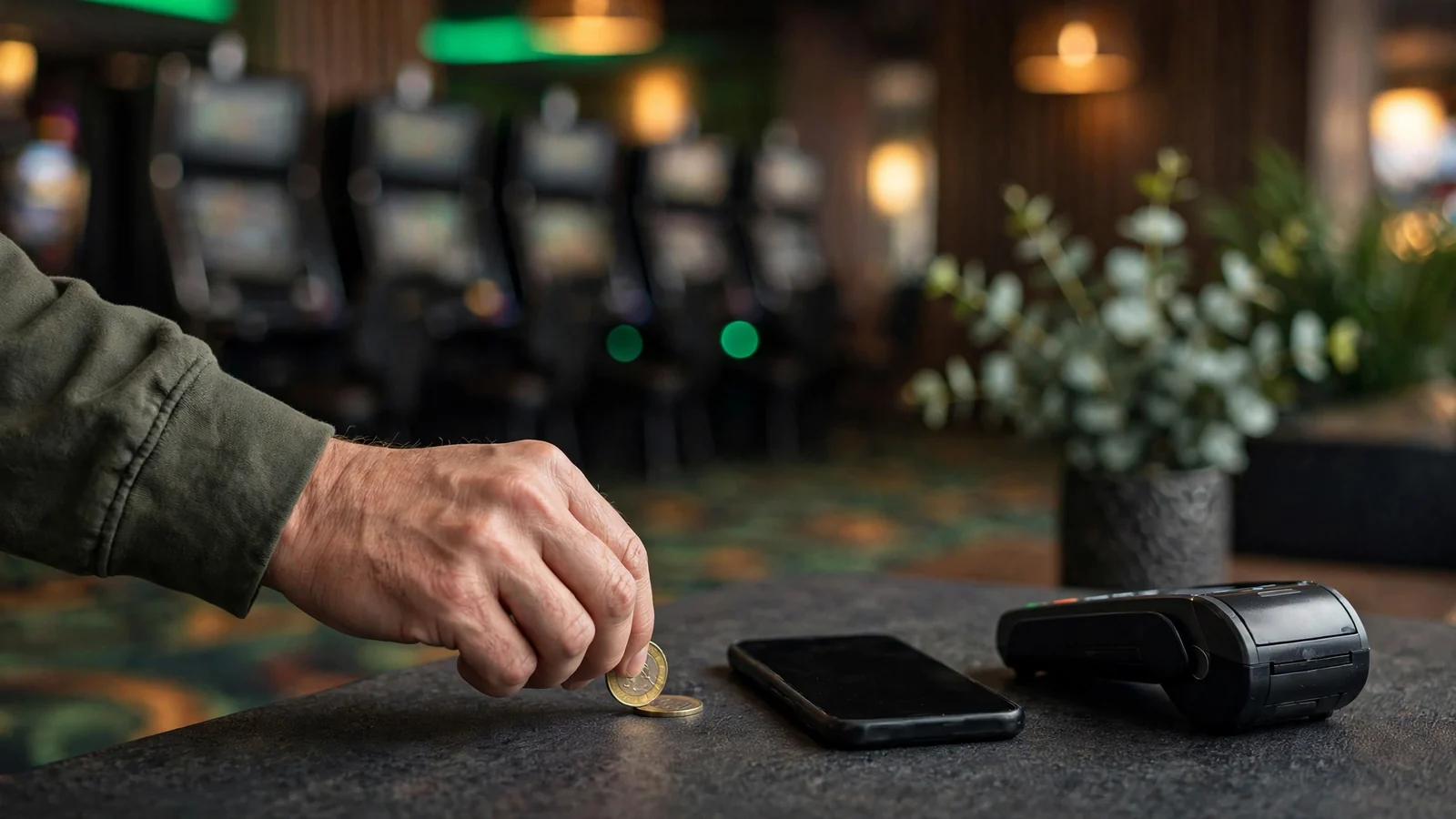
A “$1 minimum” can describe a figure shown by an operator, not an amount you can necessarily send through to an account. Those are two separate limits. An operator might say it sets no minimum deposit of its own, while the payment service used to process a transaction still has a floor. The smaller figure on a page does not override the rules of the payment route.
That distinction is easy to miss. I used to see a low number and read it as a promise: pay that amount, see the same amount credited, and get started. It is not a promise unless the terms for the specific payment method support it. A site-wide claim may describe only the operator’s side of the transaction, not what a bank, wallet or processor will accept.
So when you see “$1 minimum,” ask what the number belongs to. Is it the operator’s stated deposit threshold, or the actual minimum for the payment option being presented? If the page does not make that clear, the headline has not answered the practical question. It has only supplied one part of it.
If you’re looking for a A$1 minimum deposit, check the deposit terms carefully: the information available here does not confirm that any operator on this list accepts one. The details below can help you assess what is documented before choosing.
Golden Pokies
Golden Pokies is listed with a Curacao licence. No minimum deposit or other operator details are provided here.
Rollero Casino
Rollero Casino is listed under Curacao Gaming Control Board licence OGL/2023/176/0095, held by Hollycorn N.V. No minimum deposit information is provided here.
Uptown Pokies
Uptown Pokies is stated to have operated since 2017 and to have a A$20 minimum deposit. That documented minimum is above A$1.
SkyCrown
SkyCrown is listed with a Tobique Gaming Commission licence and a A$30 minimum deposit. Its stated payout times are around 10–15 minutes for crypto and 1–5 days for fiat.
Thor Casino
Thor Casino is listed with a Curacao licence held by Antillephone N.V. for Versus Odds B.V. Its stated minimum deposit is EUR 20.
SpinsUp
SpinsUp is listed under Curacao Gaming Control Board licence OGL/2023/174/0082, held by Dama N.V. No minimum deposit information is provided here.
7Bit Casino
7Bit Casino is listed as a Curacao-licensed operator run by Dama N.V. No minimum deposit information is provided here.
Roby Casino
Roby Casino is listed with a Curacao eGaming licence associated with Roby Games Ltd. No minimum deposit information is provided here.
Lucky Dreams
Lucky Dreams is listed with a Curacao licence and a A$20 minimum deposit when using POLi. The stated minimum is above A$1.
House of Pokies
House of Pokies is described as holding an international iGaming licence, but the jurisdiction is not named. Its stated PayID payout time is 1–24 hours; the listed minimum is A$30, or A$10 for PayID.
There is also a legal context that the wording can blur. Australia’s main federal law on online gambling is the Interactive Gambling Act 2001. It restricts providers from supplying certain online gambling services to people in Australia. That is different from making the individual act of placing a bet with an offshore operator a criminal offence. A low advertised deposit does not change the provider’s obligations under the law, and it should not be mistaken for confirmation that an online casino service is lawful to provide to Australian residents.
The gap between the operator’s figure and the usable payment amount is why a tiny headline figure can be misleading without being mathematically false. The operator may have no minimum of its own, yet the route chosen may not accept a transfer that small. In that case, the smallest practical amount is set elsewhere in the chain. You can’t infer it from the headline alone.
A specialist review gives a reported Australian usable-deposit range of A$10 to A$20. That is one review’s account, not a fixed national standard or a guarantee about every operator and payment route. Limits can differ, and the relevant figure is the one attached to the method available at the time. Still, it shows why an advertised $1 threshold and a deposit you can actually make may be quite different things.
I’d treat “no minimum” and “$1 minimum” as claims to check, not as proof that a $1 payment will go through. The first may mean only that the operator has not set its own floor. The second might refer to a nominal account limit rather than every payment option. Neither phrase tells you, by itself, what amount a processor will accept.
Nor does a stated deposit floor tell you whether a very small balance would be useful once credited. That depends on the service and its rules, not just on the word “minimum.” This is where the headline can do a neat bit of misdirection: it makes the entry number feel like the whole cost of taking part, when it only describes one step.
For a careful comparison, separate the claims in your head: the operator’s deposit rule, the payment method’s minimum, and the amount that would actually appear in the account. Then read the payment details rather than relying on a banner. If the details do not say which limit applies, there is no solid basis for treating the smallest advertised figure as available to you.
That is the plain reading of a $1 minimum. It may be an operator’s own threshold, while the payment route has a higher one. The number can be technically true and still fail to describe what an Australian customer could send. Small print matters.
A small deposit can make a promotion look low-risk, but the deposit is only one part of the deal. The bonus terms decide what you must do before bonus-related winnings can be cashed out. I used to scan the bright number first and the conditions later. That order is backwards.
Start with the wagering requirement: the amount of qualifying bets required before the bonus can be cleared. A specialist review reports low-deposit offers carrying requirements of 35x to 50x the bonus amount. Treat that as a reported range, not a promise that every offer falls within it; the terms can differ and can change. The multiplier also matters more than the headline percentage. A bonus described as “generous” can still demand a large amount of play before cash out is allowed.
The arithmetic is easy to miss. A $1,000 bonus with a 35x requirement means $35,000 in total bets must be placed before bonus winnings can be withdrawn. That is the wagering target, not a prediction that you will spend exactly that amount or finish ahead. I’ve seen how a big bonus figure can make the small print feel like an afterthought. It isn’t.
Check what the multiplier applies to. It may be the bonus alone, or the bonus plus your deposit; those produce different targets. Read the actual wording rather than inferring the rule from a banner. If the terms are unclear about the calculation, that uncertainty is part of the offer’s value to you. Don’t assume the more favourable interpretation.
The games allowed during wagering may not all count equally. Pokies are commonly credited at 100% towards the requirement, while blackjack and roulette may contribute only 10% or 20%. In plain terms, a bet on a lower-weighted game can make much less progress than the same bet on a game that counts fully. Some games may also be excluded altogether, so check the eligible-games list before playing.
This is where “play your way” can be misleading. You might be free to choose from several games, but the wagering meter may move at very different speeds depending on that choice. Look for a clear weighting table and confirm whether the contribution applies to every game in the category. If it is missing or hard to interpret, don’t treat the headline as a substitute for the rule.
A promotion can set a maximum bet while wagering is active. Check both the amount allowed per bet and when the restriction applies. If you exceed the stated maximum, the terms may allow the operator to void winnings. That can turn one accidental stake into a much bigger problem than the bonus was worth.
I’d look for the rule before starting, not after a balance changes. Make sure you know whether the limit covers every game and whether it remains in force until the wagering requirement is fully met. If the offer uses vague wording, or the cap is tucked away in a separate set of terms, pause rather than guessing. A bonus is not worth relying on when you can’t tell what counts as a permitted bet.
A maximum cashout cap limits how much can be taken from a promotion, even if the wagering requirement has been completed. Check whether the cap applies to bonus winnings, the whole balance, or a particular type of bonus. Those distinctions matter. A large advertised bonus does not tell you how much you may eventually cash out.
Before accepting, I’d put the important conditions side by side: the minimum deposit needed to activate the offer, the wagering multiplier and what it applies to, game weighting, the maximum stake during wagering, and any cashout cap. These are separate rules; satisfying one does not cancel another. Also check whether there is an expiry condition or other eligibility rule, rather than assuming the bonus remains available indefinitely.
The useful comparison is not which offer displays the biggest number. It is which set of terms you can understand and accept without counting on a best-case reading. If the multiplier is steep, eligible games are narrow, or the cashout cap is restrictive, the headline may have little practical value. If you can’t find the conditions, don’t accept on the strength of a banner.
Small print first. Always.
A displayed $1 minimum can describe the smallest amount a system will accept, not a promise that you will have a usable balance after it arrives. Those are different things. The payment may be accepted, yet the amount credited could be reduced by transaction costs, or the remaining balance may be too small to meet the game’s minimum bet.
A specialist review has reported that some cryptocurrency deposit thresholds can be as low as the equivalent of AU$1. That is a report about a particular offer, not a dependable rule for Australian players or a guarantee that the same threshold is available now. Deposit settings can vary by operator, payment route and account, and the number on a payment page can change. Read it as a claim to verify, not as a market standard.
The practical test is what happens between sending the funds and having a balance available. Crypto transfers can involve network costs, and converting Australian dollars into a coin can add another cost. With a very small transfer, even a modest deduction matters proportionally more: a few dollars taken from a larger deposit may be irritating; the same deduction can consume most of a $1 transfer. A displayed deposit minimum does not tell you how much will arrive.
Then comes the game minimum. A balance that technically exists may still be too small to place even the lowest permitted bet. If the available stake is larger than what remains, the account is funded but not practically playable. I used to treat “deposit accepted” as the same as “ready to play.” It isn’t. That distinction is the whole catch.
There can also be a gap between the amount shown in Australian dollars and the value credited in cryptocurrency. The rate used for conversion and the timing of the transfer affect what lands in the account. If the operator’s terms do not explain the credited amount, fees and minimum stake clearly, the $1 headline tells you very little. Check those details before sending anything; once a transfer is made, a payment network may not offer the same straightforward reversal as a card purchase.
Legal Risk
The Interactive Gambling Act 2001 prohibits operators from providing real-money online casino games, including pokies, to people physically located in Australia.
And there is a more important Australian context than the size of the deposit. The Interactive Gambling Act 2001 prohibits operators from providing real-money online casino games, including pokies, to people physically located in Australia. A low threshold does not make that service lawful or remove the risk of an offshore site becoming inaccessible. I would not treat a tiny test deposit as a safe way to test an operator.
So, can a person send the equivalent of $1? A specialist review has described that as possible at some cryptocurrency casinos. Can you assume that the amount will arrive intact, satisfy the game’s minimum stake and let you play? No. The deposit figure is only one part of the calculation, and it may be the least useful part.
If you are checking a claim, look for the actual minimum shown for the chosen coin, the fee or conversion treatment, the credited amount, and the minimum bet. If any of those details are absent, you cannot tell whether $1 buys a usable balance. A number on a banner is not enough.
A crypto deposit can look like the neat answer to a $1 minimum: the casino displays a tiny figure, and Bitcoin or Tether seems to avoid the limits attached to a bank-linked payment. But the amount shown on a deposit page is only one part of the calculation. What matters is the value that reaches the account after the transfer and any currency conversion.
A specialist review reports that some offshore operators accept cryptocurrency deposits as low as AU$5. That is a specific claim about some operators, not a reliable promise across the market. It also does not mean you can send exactly that amount and have the same value available to play with. The casino may account for deposits in a different currency, while the payment service or crypto network may involve costs that reduce the final balance.
That is where the “low minimum” wording can mislead. It describes a threshold, not the whole cost of getting money from your Australian account or wallet into a casino balance. If you buy crypto with Australian dollars, the purchase and conversion can affect how much cryptocurrency you end up holding. Sending it can bring another cost. Then the receiving operator converts or credits it according to its own rules. Each step can leave you with less value than the original Australian-dollar figure suggested.
I used to read the first number on a payment screen as if it were the amount I would have available. That was too tidy a way to think about it. With crypto, you need to check the amount the casino will credit, the coin and network it accepts, and whether the displayed value is fixed or can change before the transfer is credited. If those details are unclear, the small headline figure tells you very little.
Bitcoin is not automatically the cheapest route just because it is familiar. The relevant question is not which coin sounds simplest, but what the complete transaction costs and what balance arrives. A quoted minimum can also be expressed in a currency other than Australian dollars, so a figure that appears to be a dollar minimum may not represent one Australian dollar in practice.
There is a difference between a nominal minimum and a useful amount. That distinction matters when comparing claims about Australian online pokies with a $1 deposit: a casino might advertise a small threshold, while fees and conversion leave a balance that does not match the headline. A specialist review’s AU$5 example is a lower reported entry point for some crypto deposits, not evidence that a $1 Australian-dollar deposit will work everywhere.
I would treat every figure as conditional until the payment screen shows the coin, network, exchange basis and credited amount. Check those before sending anything, not after the transfer is already on its way. If the final value is hard to calculate, the deposit is not as simple as the headline makes it sound.
Crypto can make an account’s stated minimum look smaller. It cannot make conversion costs disappear, and a low threshold alone is no reason to treat an offshore gambling service as suitable or lawful for Australian residents. A small number on a screen is still just a number.
PayID sounds like the obvious route when you want to move a small amount from an Australian bank account. The transfer itself can be straightforward, but that does not mean the receiving service will accept a $1 deposit. The operator or its payment processor can set a higher floor.
A specialist review places the minimum for PayID or instant bank transfers in the AU$10–AU$20 range. Treat that as a reported range, not a promise that every service uses the same limit: the amount shown at checkout is the one that matters. If you are trying to make a $1 deposit, PayID is unlikely to match the target described in that review.
I used to focus on the word “instant” and assume it meant the whole transaction was easy. It only describes one part of the process. A bank-linked transfer may move quickly, while the site’s own minimum still blocks a smaller amount. Check the payment screen before confirming anything; a low figure on a landing page is not proof that PayID accepts it.
Cash-outs are a separate question. A specialist review describes PayID as one of the faster cash-out routes, with funds often arriving the same day after the account has been verified. That timing is not automatic. Verification needs to be complete, and the service still has to process the request. “Same-day” is a reported experience, not a guaranteed arrival time.
That distinction matters if you are comparing a deposit with a payout. A fast cash-out does not mean a $1 deposit will go through, and a small permitted deposit does not tell you how quickly you could receive funds later. They are separate checks.
Before using PayID, look at the minimum displayed for that specific transaction and make sure the account details and verification requirements are clear. If the minimum is above your budget, stop there rather than sending money in the hope that the system will accept less. I have learned the hard way that the payment label can sound more flexible than the actual checkout.
While PayID is often reported as a fast cash-out route with funds arriving the same day, this is subject to completed account verification and processor timing.
So, for someone searching for a $1 PayID deposit, the practical answer is that the reported minimum range sits well above that amount. PayID may be quick for eligible transactions and may support same-day cash-outs after verification, but neither point turns it into a dependable $1 funding option. The limit comes first.
A real-money offer can look ordinary on a page, but that does not make the service lawful in Australia. The Interactive Gambling Act 2001 prohibits operators from providing online casino games, including pokies, to people in Australia. The Australian Communications and Media Authority (ACMA) is the federal regulator responsible for enforcing that law and monitoring compliance.
ACMA can ask Australian internet service providers to block websites that provide prohibited interactive gambling services or advertise them here. A page loading today is no guarantee it will remain accessible; a block can follow enforcement action. I used to treat a working link as a kind of reassurance. It isn’t.
The scale of enforcement is worth understanding. ACMA says it has blocked more than 1,455 illegal gambling and affiliate websites since November 2019, after taking enforcement action. The reported figure for services that have left the Australian market since enforcement began in 2017 is not consistent: one account puts it above 210, while another says more than 190. Either figure points to ongoing action, not a settled list of services.
That matters if you are searching for real-money pokies with a $1 deposit. A low entry amount does not change the legal status of the service, and a site’s Australian branding does not mean ACMA has approved it. Nor does the regulator’s enforcement work mean that every offshore page disappears at once. The practical picture is less tidy: websites can be blocked, services can exit, and access can change.
I’m not saying this as a clever workaround guide. I have mistaken availability for legitimacy before, and that was bad reasoning. ACMA’s role is to enforce the law and monitor compliance, not to certify an offshore casino as safe because it is reachable or advertises a small deposit.
So treat the $1 headline as a payment claim, not a sign of regulatory approval. Check what the law covers before you decide whether to engage, and don’t read a site’s appearance or accessibility as an endorsement. A link working is not approval.
The word “Australian” on a casino’s front page can describe its intended audience, not where the business is licensed or whether it is authorised to provide online casino games here. Many sites using Australian branding operate under licences issued overseas, including in Curaçao, Malta or the Isle of Man. That licence is not an Australian one.
I used to treat local language and Australian-dollar prices as signs that a site was part of the local gambling market. They tell you how the site is presenting itself; they do not change which country issued its licence. A page aimed at Australians can still be run from offshore.
The federal law to understand is the Interactive Gambling Act 2001 (IGA). It prohibits operators from providing certain online gambling services, including casino-style games, to people in Australia. The restriction is on providing the service to customers here. It is not a statement that an Australian customer commits a crime simply by placing a bet with an offshore operator.
That distinction matters, but it is not a green light. The fact that an individual’s act of betting is not criminalised under the IGA does not make the operator’s service lawful in Australia, or turn an offshore licence into local approval. “Licensed” needs context: licensed where, and authorised to do what?
For anyone searching for Australian pokies with a $1 deposit, the branding can make the offer feel local when the operator is not. A low advertised entry point does not answer the legal question, either. Nor does a familiar currency symbol. I learned to separate the site’s sales language from its actual location and licensing.
So read “Australian” as a clue about the audience the site is targeting, not proof of Australian regulation. The federal rule concerns the operator’s provision of prohibited services to people in Australia; the individual bettor’s position is different. Both points can be true at once. No local licence implied.
A site may display a low deposit threshold, but that does not make every payment route usable for that amount. The payment provider can set a higher floor, and fees or delays can make a small transfer poor value. I’ve learned to check the payment screen, not just the headline.
Neosurf is a clear example. The minimum voucher purchase is typically A$10, so even if an account accepts less, you cannot fund it with a A$1 voucher. The practical floor is set before the money reaches the account. That is a different limit from the one an operator might state.
Skrill and Neteller can also get in the way. A specialist review reports that deposits to gambling sites through these e-wallets may incur fees and often have a A$10 minimum transaction. Those conditions can vary, so check the wallet’s own fee information and the payment options shown by the site before transferring anything. A fee matters more when the deposit itself is small: it takes a larger share of the amount.
Bank transfers are another poor fit for tiny deposits. They can take several business days to process, and your bank may charge a fee for sending the money. By the time a small payment arrives, the delay and any charge may outweigh the appeal of the low stated minimum. Not exactly instant.
So, if you see a claim about pokies with a A$1 minimum deposit, separate the account’s stated threshold from the amount you can actually send through your chosen method. A voucher may require a larger purchase; an e-wallet may apply a transaction floor or fee; a bank transfer may be slow and cost extra. The route can set the real minimum, regardless of the number in the headline.
Before making a payment, read the method’s own limits and charges as well as the site’s deposit terms. If either sets a higher minimum, the A$1 figure is not a usable deposit through that route. And where the service is prohibited for Australian customers, a payment method does not change that status.
Minimum voucher purchases are typically A$10, creating a practical floor regardless of account limits.
These e-wallets often have a A$10 minimum transaction and may incur fees that reduce small deposits.
These can take several business days to process and may involve bank fees, making tiny deposits inefficient.
A small amount going into an account does not mean the same amount can come back out on demand. The minimum to cash out is a separate rule, and it can make a nominal $1 first deposit a poor guide to what happens after a win. I used to look only at the amount needed to get started. That missed the other end of the transaction.
A specialist review puts some operators’ minimum cashout thresholds in the $20–$50 AUD range. Treat that as a reported range, not a rule that applies everywhere: the threshold depends on the operator and the payment route, and terms can change. Before sending money, find the cashout minimum in the payment and account terms. If it is higher than the balance you can reach, the money may sit there until you meet the threshold or add funds, subject to those terms.
There can also be account checks before a cashout is approved. A displayed balance is not proof that a transfer is ready to go, so check what verification is required and whether the payment method supports cashouts. Small print first. Saves grief.
One old Australian payment option to cross off is POLi. It shut down in Australia on 30 September 2023, so an old guide or payment list that still presents POLi as an available deposit route is out of date. Do not treat it as a fallback for a small deposit.
That matters if you are comparing a $1 deposit with a possible cashout. They answer different questions: one is about getting money into an account; the other is about the minimum amount and conditions for getting a balance out. A low entry figure tells you nothing by itself about the cashout threshold. Check both before making a decision, and do not rely on an outdated payment list.
A low first-deposit figure can distract from a rule that matters once you start playing: the maximum stake allowed while a bonus is active. If the terms set a cap per spin, going over it can void winnings. That can turn a small mistake into a costly one.
I have skimmed past this kind of condition before because the offer made the deposit amount feel like the whole story. It isn’t. The stake cap may apply only while wagering requirements are in progress, and the wording should say when it starts and ends. Don’t assume it applies only to bonus funds, or that a brief overstep will be ignored. Check the actual terms.
“Flexible” can mean a strict ceiling. For instance, if the promotion states a maximum stake of $5 per spin, a larger spin could put winnings at risk. The key point is not whether that limit sounds generous; it is whether you can stay within it for the entire period covered by the rule. If you cannot tell what counts as a stake, or when the restriction applies, treat the wording as unresolved rather than guessing.
Before accepting, look for the maximum stake rule and the consequence of breaking it. Check whether it covers every spin made while the bonus is active, and whether the operator reserves the right to remove winnings. If the wording is vague, save a copy of the terms and ask the operator to clarify before you opt in. A headline about a tiny first deposit does not explain these conditions.
This is separate from whether the promotion looks attractive on paper. A small entry amount does not make a stake restriction harmless, and it does not guarantee that any winnings will remain eligible to cash out. If the cap is easy to miss or difficult to follow, declining the promotion may be the more straightforward choice.
Read the small print first. Then decide.
Cryptocurrency can be the most practical option for a very small deposit: some offshore operators accept around A$5, though transaction costs can reduce its value. Neosurf vouchers typically start at A$10, while Skrill and Neteller often require A$10 and bank transfers can take several business days.
A usable deposit commonly starts at A$10–A$20, even when the casino itself sets no minimum. Some offshore operators accept cryptocurrency deposits from around A$5, but fees and betting minimums can make such a small deposit less practical.
The Interactive Gambling Act 2001 restricts providers from offering certain online gambling services to Australian residents, although placing a bet with an offshore operator is not itself a criminal offence for the individual. A no-minimum claim does not change the provider’s obligations under the law.
A usable deposit commonly requires A$10–A$20, though some cryptocurrency options start lower. Low-deposit bonuses may carry wagering requirements of 35x–50x the bonus amount; check whether the multiplier applies to the bonus alone or to the bonus plus your deposit.
Yes, but a minimum withdrawal of A$20–A$50 is common, so your balance may need to reach that amount first. If you accepted a bonus, you may also need to meet its wagering requirements before withdrawing bonus-related winnings.
Yes, low-deposit bonuses may have wagering requirements of 35x–50x the bonus amount. Slots typically count fully, while blackjack and roulette may count only 10% or 20%; check the bonus terms for the multiplier and game weighting.