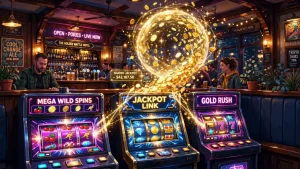
Mobile controls change how a slot looks and feels, but each spin remains an independent random event.

A phone makes a video slot feel immediate: tap the button, watch the symbols move, and see a result appear. That quick rhythm can make it seem as though the game is responding to the last spin, or that you can read a pattern in a run of results. The important point is simpler. Online pokies use a Random Number Generator (RNG), and each spin is a separate random event, independent of the spins before and after it.
I used to treat a streak as a clue. A few wins in a row felt like a reason to keep going; a stretch without one felt like the game must be due to change. Neither feeling tells you what the next spin will do. The previous result does not make a win more or less likely on the next one. A new spin is not a continuation of a sequence you can solve by watching closely.
On mobile, the screen is smaller and the controls are built for touch. The game may fit vertically, use large buttons, or present its symbols and animations differently from a desktop version. Those are changes in how you interact with the game. They do not turn the spin into a different kind of event: the outcome is still generated at random.
When choosing video slots in Australia, it helps to check the available operator information before you play. Use these short profiles as a starting point for your own checks.
Golden Pokies
Golden Pokies is listed with a Curaçao licence. You can use that as one detail to consider when researching the operator.
Rollero Casino
Rollero Casino is listed under Curaçao Gaming Control Board licence OGL/2023/176/0095, held by Hollycorn N.V. You can check that licence information as part of your research.
Uptown Pokies
Uptown Pokies is listed as operating since 2017 under a Curaçao licence, with a minimum deposit of A$20. Those details give you a starting point for assessing the operator.
SkyCrown
SkyCrown is listed with a Tobique Gaming Commission licence and a minimum deposit of A$30. Its stated payout times are around 10–15 minutes for crypto and 1–5 days for fiat.
Thor Casino
Thor Casino is listed under a Curaçao licence from Antillephone N.V. for Versus Odds B.V., with a minimum deposit of EUR 20. You can take these details into account when researching the operator.
SpinsUp
SpinsUp is listed under Curaçao Gaming Control Board licence OGL/2023/174/0082, held by Dama N.V. You can use the licence details as a starting point for your checks.
7Bit Casino
7Bit Casino is listed as operated by Dama N.V. under a Curaçao licence. You can consider those details when looking into the operator.
Roby Casino
Roby Casino is listed under a Curaçao eGaming licence for Roby Games Ltd. You can use that information as one part of your research.
Lucky Dreams
Lucky Dreams is listed with a Curaçao licence and a minimum deposit of A$20 via POLi. You can consider both details when deciding whether to research the operator further.
House of Pokies
House of Pokies is listed with an international iGaming licence, though the jurisdiction is not named in the source. Its stated PayID payout time is 1–24 hours, and the minimum deposit is A$30, or A$10 when using PayID.
That distinction matters because visual movement is persuasive. Reels slowing down, symbols landing one after another, and sound effects can make a result feel as though it is unfolding in response to your timing. But tapping at a particular moment, holding your thumb on the button, or waiting between spins does not give you a way to steer the random outcome. The animation is what you see; it is not evidence that the symbols are following a pattern you can control.
I have caught myself tapping faster after a win, as if keeping the rhythm might keep the luck going. It doesn’t. A phone can make it easy to play in short bursts, but convenience is not control. That’s the whole trick.
It also helps to separate the game’s appearance from its operation. A polished mobile layout can make a slot feel more responsive or more predictable, while a plain layout can feel less engaging. Neither impression tells you whether a result is due. The screen is where you make selections and view the outcome; the rule to keep in mind is that the spin itself remains random.
“Independent” can sound abstract, so put it in everyday terms: if one spin produces a particular result, that result does not set up the next one. A near miss does not mean the same symbols are closer to landing next time. A winning spin does not use up a win that would otherwise have come later. Each spin stands on its own.
That is true whether you play video slots online on a desktop or use mobile video slots on the bus, at home, or wherever you happen to be. The device changes the way the game is displayed and controlled; it does not make earlier spins into instructions for the next one. Online video slots are still built around random outcomes, not a memory of what you have just seen.
This is why personal “systems” can feel convincing without being useful. You might decide to change your stake after a loss, pause after a win, or switch games when a pattern seems to stall. Those choices can change how you play, but they cannot make one result predict another. I have tried to read meaning into a handful of spins. A handful is just a handful.
When you play video slots on a phone, treat each tap as a fresh event rather than a step in a story that the game is telling you. If the last few results make you feel certain that something is about to happen, take that certainty as a feeling—not as information about the next spin. That small distinction is more useful than trying to decode animations or invent a timing trick.
The mobile format can make it easy to lose track of how long you have been playing because there is no change of room or device to mark the time. That is a feature of the setting, not a property of the RNG. If you notice yourself tapping automatically, put the phone down for a moment and decide whether you actually want to continue. I learned that the hard way: a smooth interface can keep a session moving even when my attention has wandered.
People searching for the best online video slots may be thinking about themes, controls, or how a game feels on a small screen. Those are separate considerations from randomness. A slot can look crisp on a phone and still offer no way to anticipate its next result. “Best” is not a setting that lets you call the outcome.
The core idea stays the same across screens: online pokies use an RNG, and every spin is independent of the ones around it. A mobile display can make that process feel personal, dramatic, or almost readable. It isn’t a signal. It’s just a screen showing the result of a random event.
“Free spins” sounds simple: a feature gives you spins without a new stake for each one. But in a video slot, that phrase describes a particular game mechanic, not a separate kind of game and not a promise that the feature will pay. Sweet Bonanza is a useful example because its free-spin round has a feature of its own: multiplier bombs can affect winning tumbles.
A specialist review describes four or more scatter symbols as triggering 10 free spins in Sweet Bonanza. Treat that as a description of the version the review covered, not a guarantee about every version or game build. The symbols, rules and displayed feature details can vary, so the game’s own information panel is the place to check what applies to the version in front of you.
The important distinction is that the free spins are a bonus round within the slot. They do not turn the game into video poker. A slot presents symbols and applies its own rules to combinations or tumbles; video poker is built around a dealt hand of cards and the decisions available under that game’s rules. Both may appear under broad labels such as “video games” or be grouped together in a casino lobby, but their mechanics are different.
That distinction matters when you see phrases such as “bonus round” or “free spins” used loosely. In Sweet Bonanza, the feature is tied to scatter symbols and a sequence of spins. It is not a card hand, and the multiplier bombs are not poker bonuses. I once treated every flashy feature as roughly the same thing. That made the screen look more familiar than the rules actually were.
Free spins are a bonus round within a slot and do not turn the game into video poker, which is built around card hands and different rules.
During the free-spin feature, multiplier bombs can appear. A specialist review of the game describes their values as being added together first, then applied to a winning tumble. In other words, the mechanic is about combining the bomb values before the multiplier affects that win; it is not a separate prize that automatically pays whenever a bomb appears.
That “when there is a win” part is easy to skim past. A bomb showing on screen does not, by itself, tell you what the result will be. Its role is linked to the tumble it affects, and the game’s rules determine how the feature resolves. A dramatic animation can make a round feel as though something major must happen next. It is still just the game displaying its mechanic.
The word “bonus” can do a lot of work in promotional language. Here, it means an additional feature inside the slot, not a guaranteed return and not evidence that every free-spin round will be valuable. The mechanics explain how a possible win is treated; they do not tell you whether a win will occur. That is the bit I used to miss when I focused on the feature name instead of the rule.
There is another small wording trap. “Free spins” refers to the feature within Sweet Bonanza. It does not necessarily mean you are accessing a free-play version of the game, and it does not describe whether a particular site lets someone try a game without wagering. Those are separate questions.
Likewise, a slot’s free-spin feature should not be confused with video poker offered in a video-style format. Video poker still uses cards and poker hand rules. Sweet Bonanza’s scatters, tumbles and multiplier bombs belong to its slot design. Calling both products “video” does not make their play or outcomes interchangeable.
If you are looking at a specific version, read the rules for that game rather than relying on a general description. Check what triggers the feature, how the free spins are awarded and how multiplier values are applied. A review can help explain the format, but it may describe a different build from the one you see. Details matter.
I now try to separate the label from the mechanism. “Free spins” is the label; scatter symbols and multiplier bombs are parts of the mechanism. Video poker is another game altogether. Once you keep those categories apart, the screen is easier to read—and the advertising language has less room to blur what is actually happening.
The legal line in Australia is aimed at the operator, not at an individual who plays. Under the Interactive Gambling Act 2001, providing real-money online casino games to people in Australia is prohibited. That covers pokies as well as online poker and table games. A person who accesses an offshore site is not penalised simply for playing there, but that does not make the service lawful for the operator to provide.
I used to read “available to Australian players” as if it meant “approved here”. It doesn’t. A site can be reachable, accept a visitor or show a game on a phone without having permission to offer online casino services in Australia. Those are separate things, and the wording on a page can blur them.
Legal Risk
Under the Interactive Gambling Act 2001, providing real-money online casino games to people in Australia is prohibited.
The Australian Communications and Media Authority, or ACMA, is the federal regulator that monitors compliance with the Act and enforces its rules. It can ask internet service providers to block websites that provide prohibited interactive gambling services or advertise them in Australia. So access can change: a site that opens at one point may later be blocked. A video-slot game loading in a mobile browser is not evidence that the operator is authorised under Australian law.
The scale of enforcement is substantial. Since November 2019, ACMA says it has blocked more than 1,455 illegal gambling and affiliate websites after taking enforcement action. The number of services that have left the Australian market since enforcement began in 2017 is reported differently: one count puts it above 210, while another gives a figure above 190. Either way, withdrawals are part of the enforcement picture, alongside website blocking.
That does not mean every offshore site disappears at once, or that a block guarantees a particular outcome for a player. It does mean access is not settled simply because a link works today. Offshore operators also sit outside Australian consumer protection. If something goes wrong with an account, a payment or a withdrawal, the safeguards available through Australian consumer arrangements may not apply. I’d treat any promise of “local support” as a claim to examine, not proof of local oversight.
There’s a practical distinction here between what the law prohibits and what a player is likely to face. The Act prohibits operators from supplying these services to people in Australia; individuals are not penalised merely for playing at an offshore site. That narrower point shouldn’t be stretched into reassurance that using one is risk-free. A player may still face blocked access, uncertainty about who runs the service, and fewer routes for resolving a dispute.
The same applies to terms like “licensed” or “regulated”. An offshore licence is not an Australian authorisation, and it does not bring an offshore casino under Australian consumer protection. I wouldn’t read a licence badge, a familiar-looking game lobby or a polished mobile casino page as proof that Australian rules permit the service. Presentation is not jurisdiction.
For me, the useful takeaway is not that a particular video slots casino is safe to access. It is that the legal status of the service and the player’s personal exposure are different questions. The law places the prohibition on operators offering online casino games here, while ACMA’s enforcement can affect whether offshore sites remain reachable. A working page doesn’t settle either question.
So when a site presents online casino video slots as an ordinary local option, pause over what that actually means. Australian law prohibits operators from providing these games to people in the country, and enforcement includes blocking websites. An individual is not penalised simply for playing offshore, but that fact does not turn the service into a locally protected or approved one.
Attention Offshore operators sit outside Australian consumer protection, meaning safeguards for accounts or withdrawals may not apply.
Playing a video slot without wagering can show you how its screen behaves: where the controls are, how a spin is started and what happens when symbols land. That is useful for getting your bearings. It is not a preview of how your next session will go.
I used to treat a run of wins or losses as a clue. A few good results seemed to mean the game was “warming up”; a dry patch felt like it had to end soon. That’s a familiar way to read a streak, but it gives the streak more meaning than it has. Each spin is generated independently by a Random Number Generator. The result before it does not steer the result after it.
Free play can give you a feel for the pace and presentation of a game. You can watch how the reels or symbols move, try the controls and see what the game displays after a result. But the sequence you see is just one sequence. It cannot tell you whether a later spin will win, how soon a particular combination might appear, or whether a fresh session will resemble the one you just watched.
That distinction matters because a small sample is easy to turn into a story. If several spins pay something, you might think the game is generous. If none do, you might think a win is due. Neither conclusion follows from the run. The next spin remains a separate random event.
I’ve made that mistake. I’d keep going because I thought the pattern was about to turn, then realise I had mistaken my expectation for evidence. Free play can make the rules and presentation more familiar; it cannot confirm a pattern or promise that it will repeat. Not a signal.
If you are using a no-wager mode where one is available, pay attention to what it can actually show: the layout, the buttons, and the way results are presented. Keep that separate from predictions about future outcomes. A long run of practice spins still does not reveal what the next independent spin will produce.
The label “free” can also make a session feel as if it has no consequences. It may mean you are not staking real money in that mode, but it does not make the results more informative about later play. Free video slots can be a way to look around, not a test that proves a game is due to pay or that you have discovered a winning approach.
I’d also avoid judging a game by a handful of outcomes. A short run can look unusually good or unusually poor simply because random results do not arrive in a neat, balanced pattern from one small stretch to the next. That does not mean the game remembers what happened, or owes you a correction.
So, if you play video slots online for free, treat the session as familiarisation, not evidence. Notice what the interface does, then leave the results where they belong: in the session you saw. They do not set up the next spin.
Sweet Bonanza and Blood Suckers are two names you may come across when looking at video-slot games. I treat them as examples to examine, not as entries in a “best” list. A familiar title or a striking screen can make a game seem like an obvious pick; I’ve learned that neither tells you much by itself.
Sweet Bonanza is often discussed in connection with its theoretical return. A specialist review reports an RTP of 96.51% for the version it examined. That figure is not a promise about a session, and it should not be treated as a universal setting for every copy of the game. Versions can show a different RTP. The number belongs to a particular configuration, so the figure displayed in the game’s own information is the one to pay attention to when assessing that build.
That distinction is easy to miss. I’ve seen a number attached to a game name and assumed it followed the title wherever it appeared. It doesn’t necessarily. A game can have the same name while its displayed return differs between versions. Check the information provided inside the game rather than relying on a remembered figure from elsewhere. Small detail. Worth checking.
Blood Suckers is another named video slot, but I wouldn’t infer its return or other settings from the title alone. A name is a starting point for identifying a game, not a technical specification. If you are comparing it with Sweet Bonanza, look at the information shown for each game rather than assuming that details for one apply to the other.
You may also see people describe games as new, latest or especially popular. Those labels don’t establish that a particular title is suitable for you, and they can go stale quickly. I’d rather identify the exact game and version than trust a broad label. That is a less exciting way to browse. It is also less likely to leave you relying on a claim that doesn’t match what is on screen.
The same goes for mentions of free versions. The phrase can refer to a way of viewing a game without wagering, but it does not tell you what version is open or what its displayed settings are. I wouldn’t treat an unfamiliar page’s description as confirmation of those details.
These two titles are useful examples because they show why a game name and a game’s configuration are not quite the same thing. Sweet Bonanza has a reported RTP figure tied to a reviewed version; Blood Suckers is simply another title to identify and inspect on its own terms. Neither name, on its own, settles what the game will return or whether it is a sensible choice.
A stake range tells you what the game’s settings may allow, not whether the game is well made or worth your attention. I used to read a high maximum as a kind of endorsement: surely a game that lets you stake more must offer something extra. That was a bad shortcut. The size of the possible bet is a practical detail, not a quality score.
Stake Ranges
A stake range describes permitted wager settings; it is a practical detail and not a measure of a game's quality or generosity.
A specialist review reported a Sweet Bonanza stake range of A$0.20 to A$100 per spin. Treat that as a figure reported for the version covered by that review, not a universal setting. The upper limit can vary by operator, so the game title alone does not tell you what range will appear in a particular version.
The difference matters because people often compare video slots by the biggest number shown in a stake selector. A higher ceiling does not mean a better game, and a low starting stake does not prove that a game is safer or more enjoyable. Those numbers describe the permitted wager settings; they do not tell you how entertaining a game will be or how it will perform.
I’ve also made the mistake of treating the displayed minimum as a recommendation. It isn’t. A setting being available does not mean it suits your budget, and a maximum is certainly not a target. If you are looking at a game in a browser or on a phone, the stake controls are just one part of what is displayed. Take the figure at face value: it describes the range available in that version, nothing more.
For anyone comparing video slots in Australia, this is a useful way to keep the detail in proportion. Sweet Bonanza’s reported range can help you recognise what a stake selector might show, but it cannot establish that the game is among the best video slots. Nor does a broad range make a game more generous. “Flexible” sounds like praise; in this case, it only means there may be more than one permitted stake.
I now separate a game’s settings from my opinion of it. A stake range can be worth noting when assessing a slot, especially if the available options matter to you. But it cannot carry the verdict by itself. Just a setting.
People use “video slots” and “video poker” as if they were neighbouring labels for the same thing. They aren’t. A slot presents a reel or symbol game; video poker is built around cards and poker decisions. Putting both words in a phrase doesn’t make the mechanics interchangeable.
I’ve made that mix-up myself. I saw “poker” attached to a game listing and assumed the game would involve choosing cards or making a hand. Sometimes the label is just loose wording, and the actual game is a slot. The useful check is the game itself: does it show reels and symbols, or cards and poker rules? Read its instructions before you assume what you’re opening.
The same goes for “popular”. A game being widely discussed, featured, or familiar doesn’t tell you whether it suits you, and it is not the same as a measured ranking. Popularity can reflect visibility as much as anything else. I’ve clicked on a “top” label expecting some meaningful comparison and found little more than a row of games. Not much to go on.
Games featuring reels and symbols where each spin is generated by an RNG.
Games built around dealt card hands and specific poker decision rules.
Descriptions of visibility or attention, not signals of predictable outcomes.
If you’re looking to play a video slot, keep the basic distinction in mind: each spin is generated through a Random Number Generator and stands on its own. The result of one spin does not make a particular result more likely on the next, nor does a long run of misses make a win due. I used to read patterns into a screen because a near miss felt like a clue. It wasn’t. A result can feel familiar without carrying information about what comes next.
That independence also means that calling a game popular does not change its next outcome. A crowded discussion, a streamer’s excitement, or a memorable win is a story about attention or one person’s experience—not a signal built into the game. I still notice those stories. I just try not to mistake them for evidence.
So, when a listing blends slot and poker language, identify the game by its rules rather than its label. And when a game is presented as a favourite, treat that as a description of attention, not a promise about your own results. Same random spin. No hidden pattern.
A video slot has a visible layer and a mathematical one. The visible layer is the reels, symbols, sound and animations; behind it, a Random Number Generator (RNG) is used to produce outcomes. Online pokies use RNGs, while each game also has a theoretical return to player, or RTP. Those two ideas are related to how a game is described, but they are not the same thing.
The graphics can make a spin feel like a little story: symbols land, a win animation plays, and the screen invites you to keep watching. I used to read too much into that presentation, as if a near miss or a dramatic sequence said something about what would come next. It doesn’t. The software’s display is not a clue to a future result. A spin is still random, not a message.
RTP is a long-run theoretical measure, not a promise about what one person will get back in a short session. A percentage can look precise, but it describes expected performance across a vast number of spins. Your own results can sit far from that figure. That’s the part the tidy number on a game page tends to hide.
It also helps to separate the game’s software from the site showing it. A lobby tile or polished screen tells you little about the underlying maths, and I wouldn’t treat attractive presentation as proof of anything. Nor would I assume that two versions of a game have identical settings just because they look alike. The number worth checking is the one attached to the version actually presented to you, not a figure remembered from somewhere else.
There’s no magic in the interface. The RNG handles outcomes; RTP describes a theoretical long-run return. I find that distinction useful because it cuts through the noise around a game’s look and feel. Flashy software can hold your attention. It cannot make a random result predictable.
RNG (Random Number Generator) is the software used to produce the actual outcome of every individual spin.
RTP (Return to Player) is a long-run theoretical measure of expected performance across millions of spins, not a guarantee for a single session.
A game opening in a browser does not, by itself, tell you what kind of access you have. “No download” describes a possible way of loading software; it does not establish whether the session is a demonstration, requires an account, or involves real money. The same goes for a page that appears to let you start without registering. I’ve learned not to treat a quick start button as an explanation.
Before interacting with a game, look for clear information about the mode you are entering and whether an account or payment is involved. Read the labels on the page rather than relying on a tile, a preview, or a button that simply says “play”. If those details are unclear, stop there. A smooth launch can make a page feel more straightforward than it is.
Most importantly, browser access does not change how a slot produces results. Each spin is generated through a Random Number Generator and is a separate random event, independent of spins before or after it. The game does not remember a previous result and then adjust the next one because you opened it without installing anything or signing up. A run of wins or losses on screen is not evidence that the next spin is due to behave differently.
That distinction is easy to miss when the interface is quick and the reels keep moving. I used to focus on how fast I could get into a game and leave the actual terms for later. Backwards, really.
Treat “instant” as a description of the page experience, not as proof of what you are accessing or how outcomes work. Check the mode first, understand whether the session involves real money, and keep the randomness in mind regardless of how the game was opened.
RTP, or return to player, is a theoretical figure, not a forecast of what you will get back from a particular session. It is calculated across a vast number of spins, often millions. Over that scale, a higher RTP theoretically means a better return than a lower one. It does not tell you how the next spin will land. I used to treat the percentage like a promise. It isn’t one.
You can generally find a game’s RTP in its rules or paytable. Open the game information and look for the stated return figure; don’t rely on a number shown in a lobby tile or a general description. The game build matters: a specialist review notes that an operator selects which RTP version to provide, and the lobby tile may not reveal that setting. Check the in-game information panel for the configuration in front of you.
A common reference point is 96% or higher. That is a way to compare theoretical figures, not a guarantee of a particular outcome or a reason to assume every version of a game uses the same setting. If the displayed figure differs from one you have seen elsewhere, the in-game details are the relevant place to check.
This matters whether you open a game in a browser or through an app. The screen you use does not change what RTP means, and a familiar title does not tell you which version is configured. I have skimmed past the rules because I recognised a game, then realised I had never checked the actual figure. Easy mistake.
Treat RTP as one piece of information, not a quality badge. It describes long-run theoretical performance; it cannot tell you what a short run will do, or make an uncertain result predictable. Read the paytable before making any decision, and keep the distinction clear: percentage on a screen, statistical expectation over a huge number of spins. Not a promise.
Australian-licensed operators cannot offer online pokies, including Sweet Bonanza. The game is available to Australian players through offshore-licensed casinos, and individual players are not penalised for playing at offshore sites.
RTP is a theoretical statistical calculation of a slot’s expected return over a vast number of spins, often millions. It is usually shown in the game’s rules or paytable.
Australian-licensed operators cannot offer online pokies, including three-reel games. Individuals are not penalised for playing at offshore sites, but those operators are outside Australian consumer protection.
In Sweet Bonanza, four or more scatter symbols usually trigger 10 free spins. Check the game’s information panel, as features can vary between versions.
A slot’s RTP is a theoretical statistical measure of expected performance across a vast number of spins, often millions. You can usually find it in the game’s rules or paytable.