A practical guide to confirming venue access, interpreting “best paying” claims, and checking opening information around Canberra.
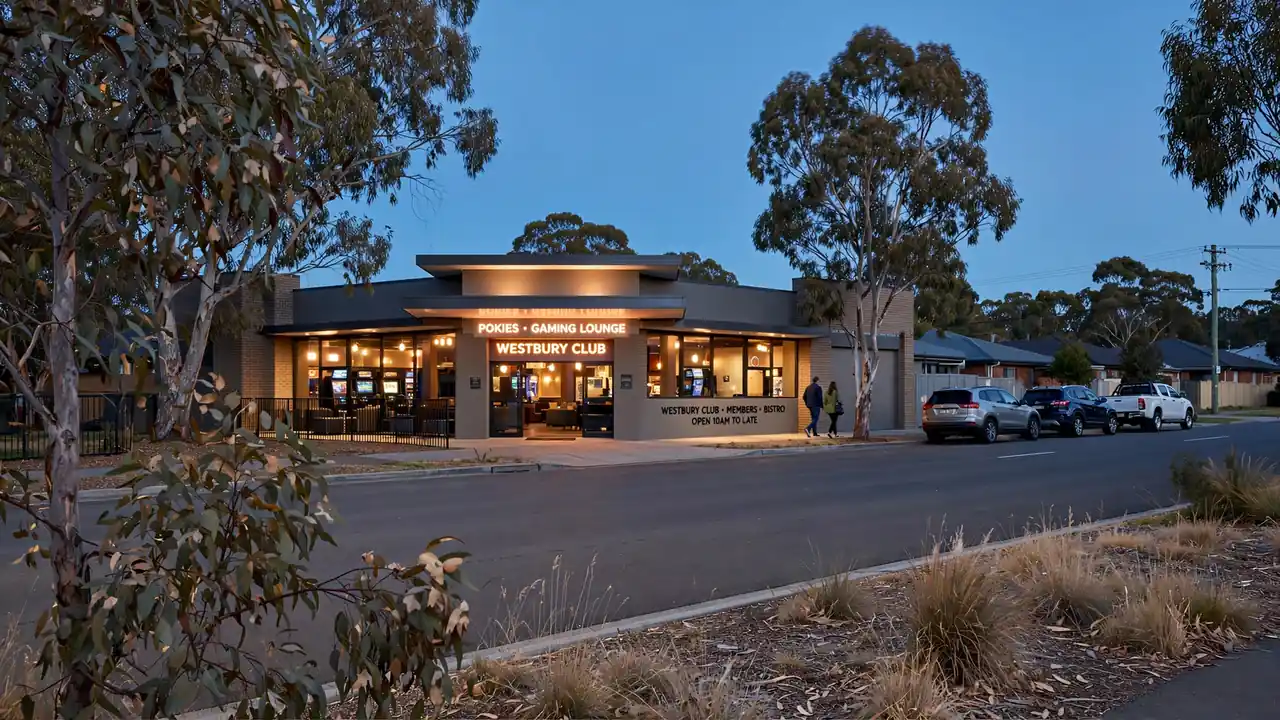
A venue can look open online and still not be available when you get there. I’ve learned not to treat a business listing, a map pin or an old social post as a live confirmation. They can be useful starting points, but they may describe the venue generally rather than whether its pokies are operating at the moment you plan to visit.
I’d check the venue’s own website or current social account first, then contact it directly if the information is unclear. Be specific: ask whether the venue is open to patrons and whether the gaming area is operating. Those are not always the same thing. A club or hotel might be accessible while part of the venue is closed, or its public-facing listing might not explain what is available on the day.
Look at the date on anything you find. A page with opening information can remain online long after arrangements change, and a post that says “open” may relate to a particular event rather than an ordinary visit. If there is no date, or the wording is vague, treat it as a clue, not confirmation. A quick call can save a wasted trip. Old information is still old.
I also try to keep separate what a listing can establish from what it cannot. A venue’s address and contact details may help you identify whom to ask; they do not prove the gaming area is operating now. Likewise, a general statement that a venue is open does not necessarily tell you whether its machines are available. Ask about the specific part of the venue you intend to use, and make sure the answer applies to the day you are going.
There is a useful responsible-gambling detail to know, though it does not answer the opening question. A report by regionriverina.com.au described a rule taking effect from 1 July under which a venue with more than 20 gaming machines must have a dedicated responsible gambling officer (RGO) present while those machines are running. The report also described a one-month transition period for venues to remove signage and put the officer arrangements in place. That is a compliance detail, not a live status indicator: an RGO requirement cannot tell you whether a particular Canberra venue is open today.
The same report said venues would need to maintain a gambling incident register. It is intended to record incidents, including situations where a patron’s behaviour suggests they may be at risk of gambling harm or already affected by it. That requirement concerns how venues document and respond to incidents. It does not provide a public timetable, confirm that a venue is operating, or replace a direct check with the venue.
This distinction matters because a compliance measure can sound like a sign that a place is ready for customers. It isn’t. If you see information about an RGO or an incident register, read it for what it says about venue responsibilities, not as proof of current availability. For that, you still need a recent statement from the venue or a direct answer from staff.
When you contact a venue, keep the question plain. Ask whether the gaming area is operating on the date you have in mind, and whether anything could affect access when you arrive. If the answer is unclear, ask for clarification rather than filling in the gaps yourself. A confident-sounding listing is not the same as a person confirming the details.
I’d also avoid relying on a third-party page just because it appears first or looks polished. Details can be copied from one listing to another, so several matching pages may still trace back to the same stale information. Check whether the venue itself has published the detail and whether it appears current. If you cannot confirm it, the honest answer is that you do not yet know.
One more trap: “open” can describe the building, the bar, the dining area or the gaming facilities, depending on who wrote the listing. Those words are easy to skim past when you’re in a hurry. I’ve done that, then had to rethink the trip. Ask about the specific service rather than assuming that one open door means everything inside is available.
For a Canberra visit, the sensible check is modest: find the venue’s own current contact details, ask about the gaming area specifically, and judge the answer by how clearly it applies to your visit. If the information is undated or only appears on a general listing, don’t treat it as settled. No guesswork needed.
If you're choosing an online pokies option while in Canberra, this list gives you a concise reference to the details available for each operator. Use the stated licensing and payment information to guide your checks before you play.
Golden Pokies
Golden Pokies is listed with a Curaçao licence. That licensing detail is the available point of reference for you.
Rollero Casino
Rollero Casino is listed under Curaçao Gaming Control Board licence OGL/2023/176/0095, held by Hollycorn N.V. You can use the licence details when reviewing the operator.
Uptown Pokies
Uptown Pokies has been operating since 2017 and has a stated minimum deposit of A$20. Those details give you a brief snapshot of its history and entry point.
SkyCrown
SkyCrown is listed with a Tobique Gaming Commission licence. Its stated payout times are around 10–15 minutes for crypto and 1–5 days for fiat, and the minimum deposit is A$30.
Thor Casino
Thor Casino is listed with a Curaçao licence from Antillephone N.V. for Versus Odds B.V. Its stated minimum deposit is EUR 20.
SpinsUp
SpinsUp is listed under Curaçao Gaming Control Board licence OGL/2023/174/0082, held by Dama N.V. You can refer to those details when checking its licensing.
7Bit Casino
7Bit Casino is listed as a Curaçao operator run by Dama N.V. Those are the available identifying and licensing details.
Roby Casino
Roby Casino is listed with a Curaçao eGaming licence, with Roby Games Ltd named as the operator. You can use those details as a starting point for your checks.
Lucky Dreams
Lucky Dreams has a stated minimum deposit of A$20 via POLi. It is also listed with a Curaçao licence.
House of Pokies
House of Pokies is described as holding an international iGaming licence, though the jurisdiction is not named in the source. PayID payouts are stated as 1–24 hours, and the minimum deposit is A$30, or A$10 when using PayID.
“Best paying” sounds like a clean comparison: find the pokie with the highest return, and you’ve found the one most likely to pay you. I used to read claims that way. The trouble is that a return percentage describes a game setting over a very large number of spins; it does not tell you what will happen to your money in one sitting.
A pokie uses a Random Number Generator to determine each spin. That means the next result does not become more favourable because the last several spins were duds, and a recent win does not make another win due. I’ve caught myself treating a losing run like evidence that the machine had to turn around. It didn’t. I was looking for a pattern where each result stood on its own.
Return to player, or RTP, is a theoretical measure of how much a game is designed to return across extensive play. It is not a forecast for an individual, a promise of a payout, or a way to know when a win will land. Even a game with a higher stated return can take your whole session’s budget without producing the result you hoped for. A percentage can describe the maths. It cannot settle your next spin.
There is another wrinkle: the title alone may not tell you the return setting. A specialist review reports that some game providers let casinos choose between multiple RTP settings for a given pokie. So the same named game may be configured with different return percentages at different casinos. If a listing gives a figure, check that it applies to the exact game and setting being offered, rather than assuming a number attached to the title applies everywhere.
That difference makes broad claims about the best-paying pokies in Canberra hard to treat as a meaningful ranking. A game name without its applicable setting is incomplete information; a return figure without context is not enough to establish what a player will experience. And a list of titles, however confidently presented, cannot turn chance into a dependable strategy. The label may be precise. The takeaway can still be misleading.
I wouldn’t read “high RTP” as “easy money.” It tells you something about a mathematical configuration, not whether a particular venue’s version uses that configuration or what will happen during your play. Nor does it say how long you would need to play to see results that resemble the theoretical return. With independent spins, short sessions can look very different from a long-run measure.
When you see a comparison, separate the claims. Is it naming a pokie, stating a return setting, or promising a likely personal outcome? Those are not interchangeable. A title can be popular without being the highest-return option; a published RTP can be real without predicting a win; and a “best paying” badge can leave out the setting that would make the comparison useful. I’ve paid attention to the bold label and skipped the detail before. That was the wrong order.
Attention: A high RTP percentage is a theoretical measure of long-term return and cannot guarantee a win or predict the outcome of any individual session.
For someone comparing Canberra games, the honest question is not simply which one “pays best.” It is whether the return information is specific to the version being played, and whether you understand that the figure cannot guarantee a session result. Without that distinction, rankings can sound firmer than the underlying information allows. I wouldn’t invent a Canberra winner from a game title or a general return claim.
A number is not a promise.
I understand the appeal of checking whether you can play online from Canberra, especially when a site makes it sound as simple as signing up and depositing. But the legal distinction matters: Australia’s Interactive Gambling Act 2001 is aimed at the companies providing real-money online pokies, not at individual players.
The Act makes it illegal for an operator to offer those games to people in Australia without a domestic licence. No Australian licences for online casinos have been issued, so there is no Australian-licensed online casino. That includes sites presenting themselves as a way to play from Canberra.
That does not mean a player faces a fine or prosecution simply for playing on an offshore site that accepts them. The law’s focus is on the operator. But “not a crime for the player” is a very different claim from “protected if something goes wrong”. I used to blur those together. Bad shortcut.
The practical risk is what happens if there is a dispute. If an offshore casino refuses to pay winnings, Australian players have no legal recourse in Australia against it. A site can display reassuring language about its service, but that does not create a local avenue for recovering money. You may be dealing with a business outside Australia, under rules and processes you cannot readily enforce here.
So a Canberra player looking at real-money online pokies should not read “available to Australians” as “licensed in Australia”. Those phrases describe different things. An offshore operator may accept a person in Australia, but acceptance does not give it an Australian licence or give the player Australian protection if the operator withholds a payout.
Promotions do not change that position either. A no-deposit offer or a promise of high stakes is not evidence that an operator is licensed here, and it does not remove the risk of a payout dispute. I would treat any headline offer as a reason to read the terms carefully, not as proof that a site is safe. A catchy label is still just a label.
BetStop needs a specific caveat. It applies to Australian-licensed operators; it does not bind offshore sites. Because there is no Australian-licensed online casino, self-excluding through BetStop should not be assumed to block access to offshore casino websites or prevent those businesses from accepting someone. If you use BetStop, do not treat it as a barrier against every offshore gambling service.
The age rule is also straightforward: gambling in Australia, including online pokies, is for people aged eighteen or older. That does not make offshore casino services locally licensed or provide a way to resolve a payment dispute.
Legal Risk
Offshore online casinos are not licensed in Australia, meaning players have no local legal recourse if an operator refuses to pay winnings.
I would separate three questions before making any decision: whether the operator is permitted to offer the service in Australia, whether the law targets the operator or the player, and what practical remedy exists if money is withheld. Here, the answers do not add up to a locally licensed online casino with Australian recourse. That is the part a promotional banner cannot fix.
This is not a recommendation to use an offshore site. It is the legal catch behind the offer: a player may not be the one the Act penalises, yet still be left without an Australian remedy if the operator fails to pay. Keep those two points together. Don’t confuse them.
I know the temptation: you have a few minutes to spare, or you’re already on one side of Canberra, and you want to know whether there’s a pokies venue close by. “Near the airport” sounds like a clear instruction. It isn’t, unless the place and the distance have both been checked.
I can’t responsibly name a venue as being near Canberra Airport or the CBD without a confirmed address and a reliable route to compare against. A result with Canberra in its name, or a map pin somewhere in the territory, doesn’t answer the practical question: is it actually convenient from where you are? I’ve made that mistake myself—seeing a promising label and treating it as directions. It isn’t.
The same goes if you’re looking around North Canberra, or trying to find pokies close to your current position. “Near me” depends on where you are and how you plan to get there. A place that looks close on a broad map may be awkward to reach by road, while a venue that seems farther away may sit on a route you’re already taking. Without an address you can confirm, there’s no honest distance to give.
Airport wording can be especially misleading. A venue described as being in the airport might mean inside the terminal, on airport grounds, or simply somewhere in the surrounding area. Those are different claims. Before setting off, check the exact address and whether the venue itself confirms that it operates there. Don’t treat a map label or a copied directory entry as proof that the place is inside the airport.
For a CBD trip, pin the actual destination rather than relying on “Canberra CBD” as a broad location. Then check the route from your starting point and decide what “near” means for you: a short walk, a straightforward drive, or somewhere on the way. I wouldn’t turn a vague nearby label into a promise of an easy visit.
If you’re already in Canberra, use a current map to establish the address and route, then confirm the location with the venue before travelling. A map helps with geography; it does not, on its own, prove that a business is operating at that address. Keep those checks separate.
I also wouldn’t assume that a venue somewhere in Canberra is near the airport just because it serves travellers, or near the CBD because it appears in a city-wide listing. Those descriptions can stretch a long way. The useful detail is a specific, current address—not a broad area name.
A venue's address and map location help you identify where to go, but they do not prove that the gaming area is currently operating.
So if you’re deciding between the airport, the city centre, or somewhere north, start with a confirmed destination and route. If neither can be established, there isn’t enough to call the place nearby. Better to pause than make the trip on a guess.
I’d be wary of any confident claim that one Canberra venue has the “best” pokies. A venue name, a polished page or a glowing review doesn’t tell you what machines are on the floor, how many there are, or whether a claim about a particular game has been checked. I’ve learned not to mistake a persuasive description for evidence.
Before taking a venue-level claim seriously, look for something specific behind it. If a page says a venue has a certain machine or a particular feature, does it explain where that information came from and when it was checked? If it says the venue is better than another one, what is the comparison actually based on? A ranking without a clear method is just a ranking.
I would also separate claims about a venue from claims about individual machines. A venue may have pokies, but that alone doesn’t establish which games are available or tell you anything dependable about a particular machine. I can’t name a best pokies venue in Canberra on that basis, and I wouldn’t fill the gap by guessing. No grand verdict.
There is a more practical thing to check: how the venue handles gambling harm. A report by regionriverina.com.au describes a requirement taking effect from 1 July for venues operating more than 20 gaming machines to have a dedicated responsible gambling officer (RGO) on duty while those machines are running. That gives you a concrete question to ask if a venue says the requirement applies to it: is the RGO on duty while the machines are operating?
The same report says venues will need to keep a gambling incident register. It is intended to record incidents, including situations where a patron’s behaviour suggests they may be at risk of, or experiencing, gambling harm. That’s a more meaningful sign of responsibility than a vague claim that a venue “cares”. You can ask how staff respond when someone appears distressed or unable to stop. You don’t need to disclose personal details to ask what the process is.
For me, a useful check is whether the venue can answer plainly, without turning a safety question into a sales pitch. I’d look for clear information about who is available to help and how concerns are handled, rather than treating décor, machine choice or a review score as proof of quality.
If you’re comparing pokies venues in Canberra, keep the claims narrow: confirm what is actually stated, ask what supports it, and don’t treat an unsubstantiated “best” label as a recommendation. The responsible gambling arrangements are worth checking in their own right. They still don’t tell you which machine will pay, or make any session a safe bet.
“Open 24 hours” sounds definite, but it can hide an important distinction: a venue’s doors being open does not, by itself, tell you whether its pokies are available throughout that time. I used to treat a late-night listing as the whole answer. It isn’t.
A venue's doors may be open 24 hours a day, but this does not automatically mean the pokies are available throughout that entire period. Different areas of a venue can have different operating hours.
Hours can also be presented differently across a venue’s own website, a map listing and an older directory entry. A page may stay online after details change, and a search result can show a summary without making clear when it was last checked. That is how a broad claim can look settled when it is not. Worth a pause.
For a Canberra visit, look for current hours published by the venue itself, then check whether the information specifically covers the gaming area rather than just the wider premises. If the wording is unclear, contact the venue and ask directly whether pokies are operating at the time you intend to visit. That is a more useful question than relying on the label “24-hour”.
The same care applies to ordinary opening hours. A venue’s general schedule may not answer whether its gaming facilities are open at the same times, and a listing that says “open now” is only useful if the listing is current and refers to the place you mean. Check the date or update context where it is shown; if there is none, treat the claim as a lead, not a guarantee.
I also wouldn’t plan a late trip around a single snippet or an old review. If you are already on your way, a direct call is a practical way to confirm the present situation. If nobody answers, that still does not prove the venue or its pokies are open—or closed. It just means you do not have a direct confirmation yet.
A round-the-clock claim should be especially clear about what it covers. Does it describe the whole venue, a particular service, or the pokies themselves? Those are different things, and a headline may not spell out the difference. Ask specifically about the gaming area and the hours it is operating, rather than assuming one set of premises-wide hours applies to everything.
For me, “open now” is a prompt to check, not a promise. Make sure the information is recent, comes from the venue where possible, and answers the actual question you have: whether pokies are available when you plan to go. A little confirmation beats a wasted journey.
Crown is a recognisable name, so it is easy to read it in a Canberra listing and assume there must be a local casino or pokie room behind it. I have made that leap before: a familiar brand in a headline feels like confirmation, until you look for the actual venue details. The name by itself proves nothing about a Canberra location.
Before treating a reference to Crown as a place you can visit, look for a Canberra street address and a venue’s own current information. Check whether the page is actually about Canberra, rather than Crown generally, another city, or an unrelated business using the same word. A page title or map label can create an impression of proximity without establishing that a Crown casino operates in the city.
That distinction matters if you are trying to find a particular room or compare pokie venues. A brand mention is not evidence that Crown machines are available locally, and it cannot tell you what facilities a Canberra venue has. I would want the venue itself to identify its location and offering before relying on a third-party description. If those details cannot be matched, I would leave the claim unconfirmed rather than build a plan around it.
Do not assume a brand name like Crown indicates a local presence in Canberra without first verifying a specific street address and direct venue statement.
The same caution applies to claims about a “best” pokie room. That phrase sounds like a verdict, but without a confirmed local venue and clear grounds for comparison, it is just a label. It does not establish that a room exists in Canberra, that its machines differ from another venue’s, or that a player is more likely to win there. A confident ranking is still only as useful as the information underneath it.
Maximum cash payout claims need the same scrutiny. A number attached to a Crown-related result does not establish a payout available at a Canberra venue. Nor does the brand name alone show which machine, rules or conditions a claim refers to. I would not treat a headline as a promise about what can be collected locally.
So if you have seen Crown linked with Canberra, separate the brand from the place: find an identifiable local address and a direct venue statement before accepting the connection. If all you have is the name, you have a lead to check, not proof of a Canberra Crown casino or its pokies. That’s the honest line.
A club in Canberra’s CBD can sound like a straightforward answer when you want pokies nearby. But “CBD club” is a broad label, not proof that a particular venue has machines, or that it has the kind of gaming room you have in mind. I’ve learned not to turn a tidy description into a recommendation.
A venue’s own current information is a better starting point than a copied directory entry; if the detail matters, ask the club directly whether it has pokies and what information it can confirm about them. That’s less exciting than a ranking. It’s also more honest.
Machine counts need care, too. A number attached to a club may describe a whole venue, come from an old listing, or refer to something other than the machines available to patrons. Without a clear, current basis for the figure, it tells you little. And a count alone says nothing about whether a particular game suits you.
There is a separate responsible-gambling requirement worth knowing about, though it should not be mistaken for proof about any Canberra club. A report by regionriverina.com.au describes a rule taking effect from 1 July: venues operating more than 20 gaming machines are to have a dedicated responsible gambling officer (RGO) on duty while those machines are running. The report also says venues have a one-month grace period to make the change and must keep a register of gambling incidents, including signs that a patron may be at risk of harm. Those are venue-level safeguards, not a rating of a club or its games.
If you’re asking about self-exclusion, be precise about what you need to exclude yourself from. BetStop applies to Australian-licensed operators; it does not bind offshore sites. That does not establish which Canberra clubs offer venue-based exclusion or explain their process. Ask the venue what options it provides and how to use them. If you want support with gambling harm, seek help from an appropriate Australian support service.
I’d keep the decision simple: confirm that the club actually offers what you’re looking for, and don’t treat a machine count, a label, or a confident-sounding description as evidence that it is the right choice for you. No guesswork dressed up as certainty.
Parkes is a specific Canberra location, so a request for pokies there is narrower than a general hunt around the city. But a place name in a page title, map label or directory entry does not establish that pokies are on the premises. I’ve learned to separate “near Parkes” from “in Parkes”; they are not interchangeable.
That distinction matters when a result uses broad wording. A venue might be described as serving Canberra without being in the area you had in mind. A map pin can show an address, but it cannot, by itself, tell you whether the place has gaming machines. Nor does a polished “best pokies” label tell you that a particular machine is available at that location.
I wouldn’t treat a Parkes-specific claim as a recommendation until the venue itself confirms what it offers. Even then, machine availability and a game’s return setting are separate questions. Some providers allow casinos to choose between different RTP settings for the same game, so a name alone cannot establish the setting in use. And each spin is an independent random event; yesterday’s result does not make the next one due.
No magic shortcut. The location has to match the claim.
If you do visit a venue, remember that responsible-gambling tools can include deposit limits, loss limits, session time limits and self-exclusion. These are practical controls, not a way to make gambling predictable. I’ve made the mistake of treating a convenient location or a confident description as if it settled the important questions. It doesn’t.
Keep the claim modest: a listing can point you toward a place to ask, but it is not proof of what is inside. Don’t read “Parkes” as evidence of a local gaming floor, and don’t read “best” as a promise about outcomes. A grounded choice starts with confirming the actual venue and its machines, then deciding whether gambling fits your plans at all. If it doesn’t, walking away is a sound call.
“Cashless” can mean different things. PayID is a way to transfer money, not a description of how a pokie accepts or handles money at a venue. It works through Australia’s New Payments Platform (NPP): instead of entering bank details, a sender can use an alias such as an email address, mobile number or ABN.
The NPP is supported by all major banks and uses end-to-end encryption. That tells you something about the transfer system. It does not tell you whether a Canberra venue has cashless pokies, what machines it has, or how those machines operate. I’ve made the mistake of treating a payment label as proof of more than it says. It isn’t.
PayID also cannot establish that a venue is licensed, that a pokie is fair, or what return setting a game uses. Those are separate questions, and a payment method is not evidence for their answers. Keep the categories apart.
The same goes for a Newcastle result appearing beside Canberra information. The place name alone does not confirm a Newcastle venue, its machines, or any connection to a Canberra venue. I can’t responsibly turn that association into a recommendation or a local venue claim.
If you are considering gambling online, remember that BetStop applies to Australian-licensed operators; it does not bind offshore sites. That matters because a block or self-exclusion with BetStop cannot be assumed to stop access through an offshore operator.
So, when you see PayID mentioned, read it narrowly: it is an alias-based transfer method on the NPP. Don’t let “cashless” blur the distinction between moving money and the way a pokie works. Different things.
Yes, Australian players can legally play on offshore sites that accept them, but offering real-money online pokies to Australians without a domestic licence is illegal. No Australian online casino licences have been issued, and you have no legal recourse in Australia if an offshore casino withholds your winnings.
E-wallets such as Skrill and Neteller are popular for their speed. Check the casino’s withdrawal terms before choosing a method.
It is the amount you must bet before bonus winnings can be withdrawn. For example, a $500 bonus with a 40x requirement means you must wager $20,000; if the requirement applies to a $500 deposit plus a $500 bonus at 35x, that means $35,000 in bets.
Yes, PayID is treated like any other qualifying deposit method at the recommended sites.