A game name alone does not establish its features, availability, payment options, or connection to an Australian-licensed casino.
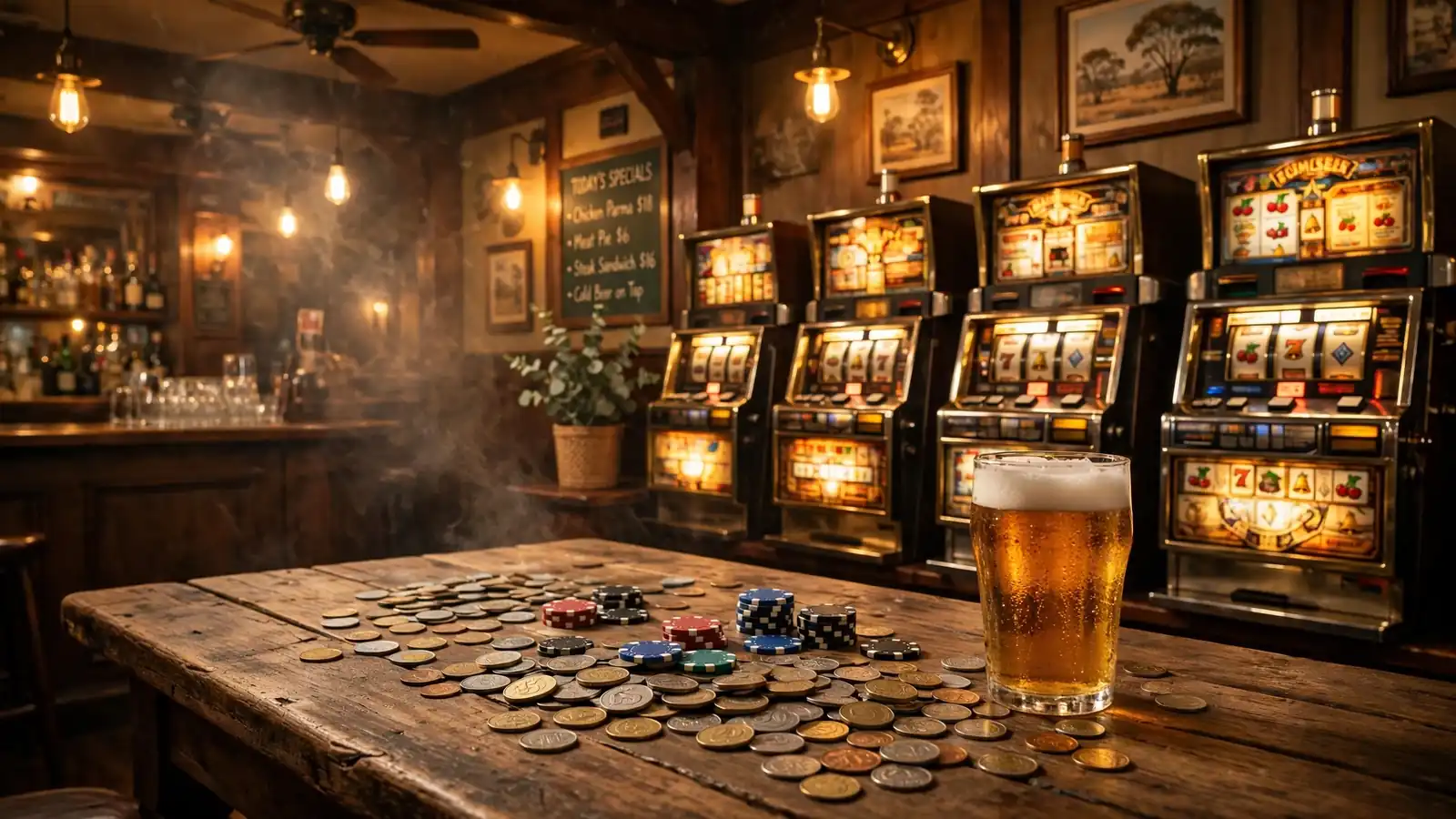
A page labelled “Dragon Link” can create the impression that you are looking at a specific digital version of a familiar machine. But a name on a page, by itself, does not tell you what the game contains, who made it, or whether it is available to play. I’ve learned to separate the label from the evidence. They are not the same thing.
The useful distinction is between a general category and a particular game. A Bitcoin pokie is a digital slot machine that accepts Bitcoin as a form of payment. That describes the broad type of product and one aspect of how it handles payment. It does not identify Dragon Link as one of those games, nor does it establish anything about a particular Dragon Link machine.
That boundary matters because online descriptions can make a general statement sound like a game-specific one. A site might talk about digital pokies, then place a named game beside that explanation. The layout can quietly suggest that every detail applies to the named machine. It may not. If the wording only describes Bitcoin pokies as a category, it cannot tell you whether Dragon Link accepts Bitcoin, what its interface looks like, or how its features work.
If you’re looking at Dragon Link online pokies in Australia in 2026, checking the available operator details can help you make a more informed choice. Use the information below as a reference, and verify the current terms before playing.
Golden Pokies
Golden Pokies is listed with a Curacao licence. That is the licensing detail provided for this entry.
Rollero Casino
Rollero Casino is listed under Curacao Gaming Control Board licence OGL/2023/176/0095, held by Hollycorn N.V. You can use the licence reference when checking the operator.
Uptown Pokies
Uptown Pokies has operated since 2017 and is listed with a Curacao licence. The minimum deposit is A$20.
SkyCrown
SkyCrown is listed with a Tobique Gaming Commission licence. Its stated payout times are around 10–15 minutes for crypto and 1–5 days for fiat; the minimum deposit is A$30.
Thor Casino
Thor Casino is listed with a Curacao licence through Antillephone N.V. (Versus Odds B.V.). Its minimum deposit is EUR 20.
SpinsUp
SpinsUp is listed under Curacao Gaming Control Board licence OGL/2023/174/0082, held by Dama N.V. You can refer to that licence detail when assessing the entry.
7Bit Casino
7Bit Casino is listed as a Curacao operator run by Dama N.V. Those are the available details for this entry.
Roby Casino
Roby Casino is listed with a Curacao eGaming licence and is operated by Roby Games Ltd. You can use those details as a starting point for your checks.
Lucky Dreams
Lucky Dreams is listed with a Curacao licence. The minimum deposit is A$20 when using POLi.
House of Pokies
House of Pokies is listed with an international iGaming licence, though the source does not name the jurisdiction. PayID payouts are stated as taking 1–24 hours; the minimum deposit is A$30, or A$10 when using PayID.
The same goes for a phrase such as “Dragon Link machine”. It might refer to a physical machine, a digital presentation, or simply the wording used by a page. Without reliable details tied to that particular game, the phrase does not settle which meaning is intended. I would not treat a familiar-looking name as proof that a specific online version exists.
It is easy to overread a polished page. A title, a picture, or a short description can look definitive, especially when it uses confident language. But presentation is not verification. If a page does not clearly establish that a detail belongs to the named game, it is safer not to assume it does. That is not being fussy; it is keeping a general description from turning into a claim about something more specific.
For instance, the category-level description of Bitcoin pokies tells you that they are digital slot machines and that Bitcoin is accepted as a payment form. It does not tell you whether a particular named machine has a Bitcoin option. Nor does it establish a provider, theme, symbols, bonus rounds, paytable, volatility, return rate, or compatibility with a particular device. Those are separate claims, and each would need evidence connected to the game itself.
This is where the wording on a page deserves a closer read. Is it describing online pokies generally, or does it make a concrete statement about Dragon Link? Does the detail clearly belong to the named machine, or is it part of broad promotional copy around a page? If that distinction is blurred, the sensible reading is the narrower one: you have learned something about the category, not necessarily about the game.
I’m wary of filling gaps with what sounds plausible. A known-sounding name can make people expect familiar features, and a digital display can resemble a physical machine without proving that it is the same product. Similarity is not confirmation. Even a page that repeats the name several times has not added useful detail unless it supports its claims about that particular machine.
There is also a difference between identifying a kind of product and endorsing it. A neutral description of digital pokies does not tell you whether a particular game is suitable, accessible, or safe to use. It certainly does not turn a general payment description into a recommendation. When the detail stops at the category level, the honest account stops there too.
So, when a page connects Dragon Link with online pokies, read the connection carefully. The general meaning of a Bitcoin pokie is clear: a digital slot machine that accepts Bitcoin as payment. The game-specific meaning is another matter. A name alone cannot supply the missing particulars. Keep those two things separate, and you are less likely to mistake a broad description for a verified account of Dragon Link.
Online pokies may offer a choice between free play and real-money play. The labels sound simple, but they describe different ways of using a game, not a promise that every named title comes in both forms. I’d keep that distinction in mind before treating “free” as a confirmed feature of a particular game.
In ordinary terms, free play means using a game without staking real money. Real-money play means money is involved in the play itself. That is the basic difference. It does not tell you what a particular free-play version looks like, whether it is available, or whether its rules match those of a real-money version. Those details can’t be filled in just because a page uses a familiar game name.
That matters when you are looking for a free way to try Dragon Link. A page or result that pairs the name with “free” is not, by itself, proof that an official or otherwise verified free version exists. Nor does a general statement that online pokies can be played for free establish anything about one particular title. I would treat the wording as a claim to check, not as confirmation.
The same goes for a “review” that discusses free play. The word can cover very different things: a review might describe a general way to try online pokies, or it might make a specific claim about a named game. Those are not interchangeable. If the details are vague, don’t let the game name do the work of evidence.
Free play can be useful as a way to understand the broad feel of an online game without putting money into the play. But that is a limited purpose. It cannot tell you what a real-money session would involve, and you should not assume that any game behaves identically across both modes. A free option is not a test of whether real-money play is suitable, safe, or worth pursuing. Different mode, different stakes.
I’ve learned to distrust the little word “free” when it is doing too much work. It may describe the mode of play, but it does not settle who provides it, what conditions attach to it, or whether the named version is genuine. A page can put “free” beside a game title and still leave those basic questions unanswered. The label is not the whole story.
There is also a difference between a free-play option and a free offer that comes with conditions. The first describes playing without staking real money; the second may involve separate terms. Don’t assume that a free-play label means a cash prize, a transferable balance, or a route into real-money play. Those are separate claims, and each needs its own clear explanation.
If you are comparing descriptions, look for plain language about which mode is being discussed. Is the page talking about free play in general, or making a concrete claim about a particular Dragon Link version? Is it clear what “free” means in that context? If the wording blurs those points, it has not given you much to rely on. That is not nit-picking. It is the difference between understanding a mode and accepting a sales label.
I would also avoid treating free play as a recommendation to move on to real-money play. One mode does not obligate you to try the other. The choice between them is a distinction, not a progression. A page that presents free play mainly as a stepping stone is adding a pitch, not clarifying what the mode means.
So, if you have seen Dragon Link described as free to play, keep the claim in proportion: online pokies can offer free or real-money modes, but that general fact does not confirm a specific free Dragon Link version. “Free” tells you what a page says about the mode. It does not verify the game.
A request to play Dragon Link for money is not just a question about a game. In Australia, the first thing to understand is the legal position: the Interactive Gambling Act 2001 bars operators from providing real-money online casino services, including pokies, to people who are physically in the country. That restriction applies to the service being offered, not just to the name or theme of a particular machine.
So a website using Australian language, accepting Australian visitors, or displaying a game title does not become an Australian-authorised casino by doing so. The operators discussed in this context are offshore businesses. Their licences are primarily issued by Curacao eGaming or the Anjouan Gaming Authority, rather than by an Australian gambling regulator. That distinction is easy to miss when a page is designed to look familiar. It still matters.
I used to treat a licence badge as if it answered every legal question. It doesn’t. A licence from another jurisdiction is not the same thing as permission to offer real-money pokies to people in Australia. Nor does a polished site, a local-sounding label or a familiar game name change the rule. Those are separate things, however reassuring they may look on screen.
There is another part people can overlook: Australian consumer protection laws do not apply to the offshore operators discussed here. If a dispute arises, you cannot assume that the protections and complaint pathways associated with Australian businesses will cover an offshore casino. That does not tell you in advance how any individual dispute would be handled; it does mean that a local-looking website should not be mistaken for a locally protected service.
I find it useful to separate three ideas that get blurred together: a game’s name, an operator’s overseas licence, and the law governing services offered to people in Australia. They are not interchangeable. Seeing Dragon Link mentioned on a casino page tells you what the page claims to feature. Seeing a foreign licence tells you the jurisdiction the operator points to. Neither establishes that real-money casino play is lawful for an Australian resident.
That is the legal context behind searches for real-money Dragon Link pokies. It is not a recommendation to find a site, open an account or try to get around restrictions. The search phrase may sound like a straightforward request for a game, but the law concerns the service and where it is provided. The difference is less exciting than a game title. It is more important.
Legal Restriction
The Interactive Gambling Act 2001 bars operators from providing real-money online casino services, including pokies, to people physically located in Australia.
The same point applies when a site presents itself as an “Australian casino”. That phrase can describe its intended audience or its marketing, but it does not make the business Australian-licensed. The operators discussed here hold offshore licences, and the Australian consumer protections that might be expected with a local service do not extend to them. A badge, a welcome page and a familiar currency display are not substitutes for that protection.
I’m wary of confident wording on gambling pages because it can make a complicated boundary sound settled in the operator’s favour. “Licensed” may be true in the sense that an overseas authority has issued a licence, while still not meaning the operator is authorised to provide real-money online casino games to people in Australia. Read those claims narrowly. Don’t let a general licence statement answer a different question.
This page is affiliate material and may include sponsored links. That disclosure does not change the legal position, turn an offshore service into an Australian one, or amount to an endorsement. I’m including it because commercial ties should be visible, not hidden behind neutral-sounding language.
If you are checking a real-money offer, keep the basic distinction in view: Australian law prevents operators from supplying online casino games for money to people located here, while the operators discussed are licensed offshore and sit outside Australian consumer protection laws. That is enough to avoid confusing a foreign licence with local authorisation. No spin.
A page can put “Dragon Link” in its title and still tell you very little about the named pokie. I’ve learned not to treat a confident heading, a familiar name or a polished screenshot as proof that a particular game is available, or that the details on the page are accurate. For 2026, I can’t substantiate a current Dragon Link release, an online version, or its availability to people in Australia.
That distinction matters. Bitcoin pokies, as a broad category, are digital machines that accept Bitcoin as payment. That description does not establish that Dragon Link is one of them. It also does not tell you who made a Dragon Link game, what it looks like, how it plays, or whether a website displaying the name is connected to any genuine version. A category description is not evidence about a named product.
I’d be careful with claims that sound specific but come without something you can independently check. A page might describe a feature, show a supposed game screen or label a version “online”; those details still need evidence tied to the actual game. A name being repeated across several pages does not strengthen the claim if the pages all appear to be repeating one another. Familiarity isn’t verification.
The year in a page title deserves the same caution. “2026” can simply make a page look current. On its own, it does not confirm that a Dragon Link pokie has been released, updated, or made available this year. Nor does it establish that an online listing is live rather than a description, an old page, or an unauthorised use of the name. I wouldn’t infer any of that from the date alone.
When I’m trying to establish what a named game actually is, I look for evidence that identifies the product clearly, not just a page built around the name. If the available description never moves beyond the words “Dragon Link”, there may be no solid basis for its feature claims. That is not a small detail. It is the difference between recognising a label and knowing what is being represented.
There’s also a difference between a general claim about digital pokies and a claim about a specific Dragon Link machine. The first tells you what kind of product Bitcoin pokies are said to be. It cannot fill in missing details about the named game. I wouldn’t use a general explanation to decide that a particular Dragon Link version exists or works in a particular way.
This page is affiliate material and may include sponsored links. That disclosure is not evidence that a game exists or that a listing is accurate; it’s a reason to read promotional claims with care, not to treat them as independently confirmed. I’ve been taken in by polished wording before. The name alone doesn’t settle it.
So if you’re looking for Dragon Link pokies in Australia in 2026, keep the claim narrow: the name is being used in the search, but that does not verify a specific online game or its present availability. I can’t confirm more than that. No guesswork dressed up as certainty.
A casino label can make a site sound local when it isn’t. I’ve learned to separate the words on a page from the status behind them: a site describing itself as an online casino in Australia is not, by that description alone, Australian-licensed.
The operators discussed in this context hold offshore licences, primarily from Curacao eGaming or the Anjouan Gaming Authority. Those are foreign regulators, not Australian authorisations. Seeing one of those names tells you where an operator says it is licensed; it does not mean it has permission to offer real-money casino games to people in Australia.
That distinction matters for anyone arriving at a page about Dragon Link through casino wording. The phrase can describe what someone is looking for, but it doesn’t establish that a particular casino is Australian, that the named game is available there, or that the operator is locally regulated. Search language is not a licence.
Australia’s legal position is not that locally licensed online casinos may offer real-money pokies to residents. The Interactive Gambling Act prohibits operators from providing those services to people in Australia. So “Australian casino” and “casino available to Australians” are not interchangeable claims, and an offshore licence does not change that.
There’s a practical consequence too. Australian consumer protection laws do not apply to the offshore operators discussed here. If a site uses polished local language, that can make the arrangement feel familiar, but it doesn’t bring the operator under Australian protections. I wouldn’t treat a local-looking page or an offshore licence as a substitute for that protection.
This is affiliate material and may include sponsored links. That disclosure is not a recommendation, and it does not make an offshore casino Australian-licensed or remove the legal and consumer-protection concerns. I’d read any licensing claim as a statement about the operator’s offshore status—not as proof that real-money online casino services are authorised for Australian residents.
Keep the distinction plain: a casino-related description is not evidence of Australian licensing. The label can sound reassuring. The jurisdiction is what matters.
“Bitcoin pokies” describes a payment category, not a particular game. The term refers to digital slot machines that accept Bitcoin as a form of payment. That definition alone tells you nothing about which titles are available, who made them, or what happens on screen.
I’ve learned not to treat a familiar name in a page heading as proof that the page is describing the game I had in mind. A page can use Dragon Link language while offering no details that establish a specific Dragon Link title. The wording may sound precise; the information behind it may not be.
The same applies to mentions of a grand jackpot or a themed edition such as Golden Century or Spring Festival. Those names, on their own, do not establish that a particular game exists in the form described, or that a listed feature belongs to it. They are not evidence of jackpot rules, symbols, bonus rounds, volatility, return to player, or a machine’s provider. I would not fill those gaps with guesses just because the name sounds plausible.
That distinction matters because the general Bitcoin label is easy to mistake for a product description. It tells you only that Bitcoin can be accepted as payment for a digital slot machine. It does not verify a Dragon Link online version, nor does it show that a particular Dragon Link machine can be played through a given service. Payment terminology and game identity are separate things.
I used to read a confident title as a shortcut: if the name was there, I assumed the page had checked the actual game. That was a bad assumption. A heading can repeat a name without showing the details needed to identify the game or confirm its attributes. Nothing solid follows from the label alone.
So when a page pairs Dragon Link with “jackpot” or a named theme, keep the claim narrow. The broad category tells you what kind of digital machine the term Bitcoin pokies refers to; it does not certify a specific game or its features. If the page does not provide clear, attributable details, there is no sound basis for treating those details as established.
Names are easy. Evidence is harder.
A big win can make the withdrawal button feel like the easy part. It may not be. Some operators can put a significant win through a security review, and that review may be used to delay payment. New accounts and first large withdrawals are especially exposed to this risk.
Attention: Do not deposit more money to unlock a stuck withdrawal if an operator claims it is a requirement to release your payout.
“Security review” sounds responsible. It may be a genuine check, but the phrase alone does not tell you what is being checked or when the decision will be made. An operator can also have approval queues or process requests in batches during business hours. From your side, those explanations can look much the same: the balance is there, but the payout has not arrived.
That uncertainty is where I’d slow down, not start chasing the win. Keep copies of the withdrawal request and any messages about the review. Ask the operator to explain what is outstanding and what action, if any, it needs from you. Keep the wording factual and save the replies. Don’t assume that a reassuring status message means the money is on its way.
Most importantly, do not deposit more money to unlock a stuck withdrawal. A request to add funds before a payout is released is not a reason to send more. I’ve seen how “one last step” can turn into another loss. Stop there.
Tips about a particular game, bonus, or winning strategy cannot make an operator release a withdrawal, and a story about a winner is not proof that your own payout will be handled the same way. The name Dragon Link does not change the risk: a game label tells you nothing about how an operator will treat a withdrawal after a win.
This is affiliate material and may include sponsored links. That doesn’t make a delay harmless, or a promise of a fast payout reliable. Treat a security review as a point to document and question—not as a reason to risk more money. No extra deposit.
A result that uses the Dragon Link name and calls itself an app does not, by itself, establish who made it or what it contains. The same goes for a page describing a casino app with Dragon Link: a title and a logo are claims, not proof of a genuine connection.
I’ve learned not to treat a polished listing as a stamp of approval. Before installing anything, check who publishes it and whether that identity can be confirmed independently. Be wary of pages that push a download while giving little information about the publisher, or that ask you to install a file from an unfamiliar source. A familiar game name can make a link feel safer than it is. It isn’t.
The wording “Dragon Link pokies app” can also blur two separate things: a mobile app for accessing a casino, and a game that runs on a phone. One does not automatically establish the other. Nor does finding a page on a small screen prove there is a dedicated app; a website may simply be designed to load in a mobile browser.
The same caution applies to a claimed Dragon Link slot app and to any advertised RTP. RTP is a game statistic, not evidence that an app is authentic. A number on a page should not be treated as confirmation of the game, the publisher, or the app itself.
I wouldn’t install software or hand over account details based only on a name in a listing. If the publisher and the app’s purpose aren’t clear, stop there. A search result can point you toward a claim; it cannot authenticate the software. And an app label does not change the legal status of a gambling service in Australia.
That’s the line I use: identify the publisher first, then decide whether there is enough reason to trust the download at all. If that trail is unclear, there’s no need to take the risk.
Bitcoin payment mechanics do not explain how to play a particular pokie or improve your chances of winning. I learned not to confuse the two: moving money is a transaction, not a strategy.
At a general level, acquiring Bitcoin can involve using a cryptocurrency exchange to buy it with ordinary currency. From there, a transfer to a casino would involve sending Bitcoin from your wallet to an address supplied by that operator. That describes the mechanics, not a recommendation to use an offshore gambling service. Real-money online casino games are prohibited for operators to provide to people in Australia, and Australian consumer protection laws do not apply to the offshore operators discussed.
The address matters. Before sending cryptocurrency anywhere, check that it is the intended destination: transactions sent to an incorrect address are generally irreversible and unrecoverable. A transfer can’t be treated like a card payment that you can simply reverse by contacting a bank.
I’ve also found it useful to separate payment claims from what can actually be established. A wallet transfer does not verify a game, guarantee that a deposit will be credited, or establish how a particular pokie works. It certainly doesn’t offer a way to win. Don’t let a polished payment page turn those separate questions into one reassuring story.
If you are trying to understand Bitcoin play, start with the transaction itself and its risks—not with promises about game outcomes. Keep it plain.
“Happy and Prosperous” sounds like it could be the name of a Dragon Link version, but a familiar-sounding title is not proof that a particular machine exists. I can’t confirm that this is an official game name, a distinct edition, or a feature set attached to Dragon Link.
That matters because small differences in wording can make a page, image or listing look more definite than it is. A page using the phrase might be referring to a theme, a promotional label, an informal nickname or something else entirely. Without reliable confirmation, there’s no sound basis for describing its reels, bonus rounds, symbols, payout characteristics or where it can be found. I won’t fill those gaps with details that merely sound plausible.
I’ve seen how easily a confident label can turn into a promise in your head. “Special edition” sounds concrete; it may still tell you nothing about who made the game or whether the name is official. Keep the distinction clear: a name appearing online does not establish what lies behind it. That is all.
So, if you encounter “Happy and Prosperous” alongside Dragon Link, treat it as an unconfirmed label rather than a verified machine description. Don’t assume that a page using the wording proves the game’s identity or availability, and don’t let a polished presentation stand in for evidence. A title can be catchy. It can’t verify itself.
That’s the honest limit: the name can be acknowledged, but its existence as a distinct Dragon Link game, its features and its availability cannot be stated as established. No invented details.