Lightning Link is an Aristocrat game series played on venue machines, not offered online for real money to Australian players.
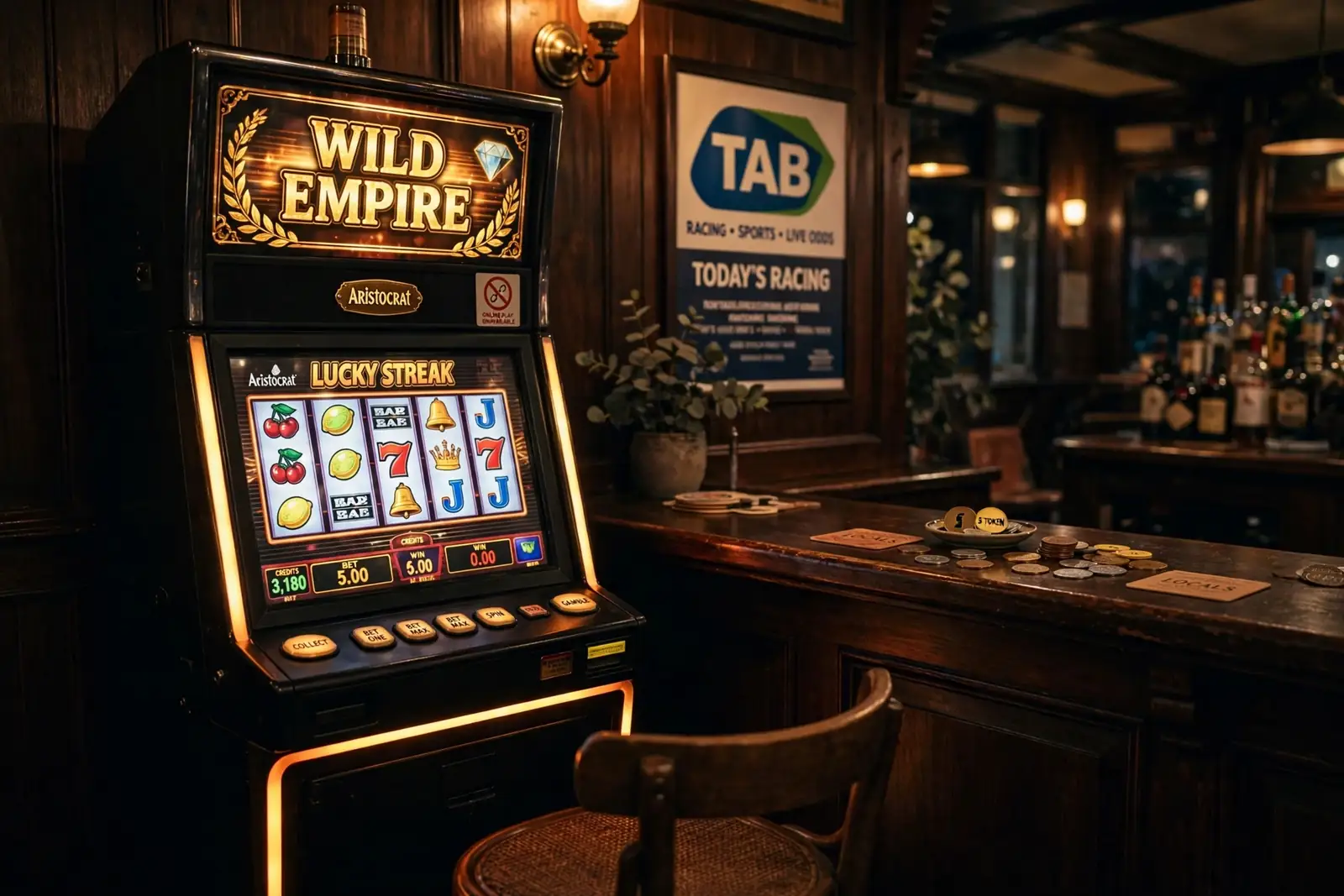
Lightning Link is a game series made by Australian developer Aristocrat. In Australia, it is played on machines in venues; it is not offered online for real money to Australian players. That distinction matters if you have come across the name while looking for an online casino game. The same words can point to very different things: a particular game series on a venue machine, or a website claiming to offer it online.
I’ve learned not to treat a familiar game name as proof that the version being advertised is the same product. A page might use “Lightning Link online” in its wording, but that alone does not make the game available there. For Australians, the real-money version belongs to the venue setting. No online replica.
That can be a frustrating answer when you were hoping to find Lightning Link at an online casino. It is still the useful one. If a site presents itself as an online casino with Lightning Link for Australian players, its wording should not be mistaken for confirmation that Aristocrat’s game series is officially available there. A name in a menu or headline is not the same as the game being offered.
If you’re looking for Lightning Link online pokies in Australia in 2026, use this list as a starting point for checking which operators’ available details suit your needs. Review the relevant licence and payment information before choosing where to play.
Golden Pokies
Golden Pokies is listed with a Curacao licence. That is the only operator-specific detail available here.
Rollero Casino
Rollero Casino is listed under Curacao Gaming Control Board licence OGL/2023/176/0095, held by Hollycorn N.V.
Uptown Pokies
Uptown Pokies is listed as operating since 2017 under a Curacao licence, with a minimum deposit of A$20.
SkyCrown
SkyCrown is listed with a Tobique Gaming Commission licence. Its stated payout speed is around 10–15 minutes for crypto and 1–5 days for fiat, and its minimum deposit is A$30.
Thor Casino
Thor Casino is listed under a Curacao licence held by Antillephone N.V. for Versus Odds B.V. Its minimum deposit is EUR 20.
SpinsUp
SpinsUp is listed under Curacao Gaming Control Board licence OGL/2023/174/0082, held by Dama N.V.
7Bit Casino
7Bit Casino is listed as operating under a Curacao licence, with Dama N.V. named as its operator.
Roby Casino
Roby Casino is listed under a Curacao eGaming licence, with Roby Games Ltd named in connection with the licence.
Lucky Dreams
Lucky Dreams is listed with a Curacao licence and a minimum deposit of A$20 using POLi.
House of Pokies
House of Pokies has an international iGaming licence, though the jurisdiction is not named in the available information. Its stated PayID payout speed is 1–24 hours; the minimum deposit is A$30, or A$10 when using PayID.
The phrase “Lightning Link casino games” can also blur the line between the series and other products with a similar look or feature. The name refers to Aristocrat’s game series, not to every online game that borrows familiar mechanics or uses similar imagery. Those may be separate products from other developers. The distinction is easy to miss when a page groups games together under broad labels.
The practical setting is straightforward: look for Lightning Link on a venue machine in Australia, rather than expecting to open an online casino and find the real-money game there. If you see claims that contradict that, pause before trusting the label. I’ve made the mistake of assuming that a game name on a screen settled the question of what was actually being offered. It doesn’t.
This also helps make sense of phrases such as “Lightning Link casino slot” or “Lightning Link casino pokies”. They describe what someone may be trying to locate, but they do not change where the game is available. In Australian use, “pokies” is the everyday word, yet the familiar name still points to a venue-based game series rather than an online real-money option.
The same applies when a site uses wording like “online casino Lightning Link” or advertises a Lightning Link game as part of a casino-style catalogue. Read the description carefully. Is it referring to Aristocrat’s venue game, or to a different product with related mechanics? If the wording does not make that clear, do not assume they are identical. Brand names can travel further online than the products they name.
I would keep the basic check simple: distinguish the game series from a website’s description of it. Lightning Link is Aristocrat’s product, and Australians encounter it on venue machines. It is not offered online for real money to Australian players. That is the central point, whether a page calls it a casino game, a pokies title or an online casino favourite.
There is no need to infer more from a search result, banner or menu label. A page may mention Lightning Link without providing Aristocrat’s game, and a related game is not automatically the same title. When the product and setting are muddled together, step back and check what is actually being described. Better a clear answer than a familiar name doing the convincing.
This page is affiliate-linked and may contain sponsored recommendations. That disclosure does not change the availability described above, and it should not be read as an endorsement of any online casino. Real-money gambling content is for people aged eighteen or over. For me, keeping those points separate is less exciting than an advert, but it saves confusion. Venue game. Not online.
“Free play” sounds straightforward, but it can describe a very different experience from gambling with money. In a social casino version of Lightning Link, you play using virtual currency. The balance may go up or down inside the game, but it is not cash you can withdraw, and a result does not turn into a real-money prize.
Attention: In social casino versions, virtual currency has no cash value and cannot be redeemed for real money.
That distinction matters more than the familiar graphics or the word “pokies”. A game can look and feel like a pokies-style game while remaining a social game, because there is no real-money win to collect. Under Australia’s Interactive Gambling Act, social casino platforms that use virtual currency and do not let players win real money are not treated as gambling.
A free version lets you try the game without staking cash on each play. You use the game’s own virtual balance instead. It may be described as coins, credits or another in-game unit; whatever the label, it has no cash value when it cannot be redeemed for money.
I’ve learned not to take “free” as a promise that every part of an app stays cost-free. The word can mean that the game itself can be started without paying, while the platform may separately offer optional purchases of virtual currency or other extras. Those purchases do not change what the currency is: it remains an in-game resource, not a deposit that can be cashed out.
So, before you tap through, check what the app says about its currency and purchases. If the balance exists only inside that platform and cannot be exchanged for real money, you are looking at social play. If the game advertises a cash-out or a real-money prize, that is a different proposition from virtual-currency free play.
No cash value. That’s the point.
The main appeal is being able to spend time with the game’s presentation without putting money at stake. You can see how the interface feels, follow the on-screen results and decide whether the style holds your interest. For someone curious about Lightning Link, a free social version can offer a taste of the format, not a way to earn.
That limit is easy to overlook when the screens use casino language. Virtual coins may be presented in a way that resembles a balance, and wins may trigger celebratory animations. Those effects are part of the game experience; they do not mean you have acquired money. A growing virtual balance stays virtual.
I once treated a large-looking in-game number as if it meant I was getting somewhere. It didn’t. I could keep playing inside the app, but there was nothing to withdraw. That was the moment the distinction stopped being abstract.
Playing Lightning Link for free online does not provide a route to real-money winnings. It also does not reproduce every condition of playing for money: the stakes, the financial risk and the consequences of a result are absent. A social version can familiarise you with the general feel of a game, but it cannot tell you what a real-money session would be like.
It is worth keeping that boundary in mind when an app uses phrases such as “big win” or “jackpot”. In a virtual-currency game, those labels describe an in-game event unless the platform genuinely allows a real-money prize. The excitement may look convincing. The currency still decides what the result is worth.
Virtual-currency games are designed for entertainment; they do not reproduce the financial risks or consequences of real-money gambling.
For me, the useful question is not whether the screen looks authentic. It is whether anything you win can leave the game as money. If the answer is no, it is entertainment with virtual currency, not a source of income. Treating it as a way to practise for profit would set the wrong expectation.
When you see a free Lightning Link game, look for the platform’s explanation of its currency and any purchase options. The practical test is simple: can you redeem the balance or a win for real money? In social casino play, you cannot. Virtual currency stays within the game.
That means you can enjoy the visuals and play without confusing a virtual result with a financial one. It also means that spending money on optional in-app currency, where offered, does not make the game a real-money gambling product if the currency still cannot be cashed out. Payment for extra play is not the same as a withdrawable win.
I’d keep the expectation plain: free means the play uses virtual currency, and virtual currency does not become cash. That is the useful distinction—not the sound of the effects, the size of the balance on screen or the language wrapped around a result.
The legal question around online casino-style games in Australia is not answered by the name on a game or the country where a website is based. The key issue is whether an operator is providing a prohibited service to people in Australia. The Interactive Gambling Act 2001 (IGA) is the federal law that sets that boundary.
Under the IGA, operators cannot provide certain real-money online gambling services to people in Australia. The prohibition covers online poker and casino-style games, including games based on familiar table formats and digital versions of venue-style games. So the law is about the service being supplied online, not just about whether a particular game carries a well-known name.
I’ve found it easy to confuse rules aimed at operators with rules aimed at players. They are not the same thing. The IGA places the central prohibition on the business providing the service. There are no known cases of Australian players being prosecuted simply for gambling on offshore sites. That is not a recommendation to use one, and it does not change the legal position of the operator.
The Australian Communications and Media Authority (ACMA) is the federal regulator responsible for enforcing the IGA and monitoring compliance with Australia’s interactive gambling laws. Its work includes taking action when it identifies services that breach the rules.
One enforcement tool is website blocking. ACMA can ask Australian internet service providers to prevent access to websites that provide prohibited interactive gambling services or advertise them to people in Australia. A blocked page is therefore not just a technical glitch to work around; it can reflect a regulatory action.
ACMA reports that it has blocked more than 1,455 illegal gambling and affiliate websites since November 2019, following enforcement action. That total covers both gambling services and affiliate sites, so it should not be read as a count of casino operators alone.
Legal Risk
Under the Interactive Gambling Act 2001, providing certain real-money online gambling services to people in Australia is prohibited.
There is also a reported count of services that have left the Australian market since ACMA began enforcing the rules in 2017. The figures differ: one account puts the number above 210, while another says more than 190. Both describe withdrawals from the market, but they do not give the same total. It is more honest to note that disagreement than to present either count as an uncontested figure.
The IGA is directed at the provision of prohibited services to people in Australia, including when a service is operated offshore. A foreign location or overseas business address does not, by itself, make the service permissible for Australian customers. ACMA’s monitoring and blocking powers are part of how the law is enforced in practice.
That enforcement landscape can feel uneven from the outside. A site may appear accessible at one point and later become blocked; another may disappear after regulatory action. Access does not establish that a service is lawful, and a website’s own claims are not a substitute for the rules set by Australian law.
For readers, the useful distinction is between a game’s theme and the way it is supplied. A title associated with a venue machine does not become an authorised online gambling service simply because a website uses the same name or presents a similar screen. The relevant legal question is whether an operator is offering a prohibited online gambling service to people in Australia.
Anyone accessing real-money gambling content must be at least 18 years old. This page is affiliate-linked and may contain sponsored recommendations; that disclosure does not change the law or endorse prohibited services. I’m wary of tidy claims that make the rules sound simpler than they are. The operator is the focus of the IGA’s prohibition, ACMA has enforcement tools that include requesting website blocks, and the regulator has used them at scale. That is the practical frame to keep in mind.
The feature that gives the Lightning Link machine its distinctive rhythm is called Hold and Spin. A specialist game review describes its central action this way: positions occupied by special symbols lock in place, while the other positions spin independently. That is the useful detail to keep in mind when you see the feature name. Some positions stay put; the rest continue moving.
“Hold” sounds simple, but it changes how the screen behaves. Once a special symbol occupies a position during the feature, that position is held rather than joining the next spin. The remaining positions are not treated as one fixed block: they spin independently of the positions already locked. The screen can therefore show held symbols alongside movement elsewhere. That contrast is the whole point.
I’ve learned not to let a dramatic feature name do the explaining for me. “Hold and Spin” can sound like a promise that something is building, but the name describes the action, not what the result will be. The locked positions remain visible while the other positions move; that is not the same as saying that a win, a jackpot, or a particular outcome is assured. A feature can make a machine feel more eventful without changing what its name means.
A feature where special symbols lock in place while the remaining positions continue to spin independently.
The independent part matters, too. It tells you that the unheld positions are not simply displayed as one combined animation with every symbol moving together. They spin separately while the special-symbol positions stay fixed. If you are watching the machine, that makes the visual sequence easier to follow: first notice which positions are held, then distinguish them from the positions that are still spinning. No hidden trick in the wording.
A lot of confusion around a Lightning Link machine comes from treating a feature label as though it were a complete set of rules. It is not. Hold and Spin tells you the basic relationship between the locked positions and the moving ones, but the label alone does not explain every condition attached to a particular machine or version. I would read the on-screen information for the machine in front of me rather than assume that a familiar name settles every detail. Small print matters.
That’s also why a Lightning Link machine review should separate what the feature does from what someone hopes it will do. The mechanical description is clear: special-symbol positions lock, and the other positions spin independently. It does not tell you that the feature will produce a prize, how valuable an outcome might be, or whether the machine will reach a jackpot. Those are different questions, and the name itself answers none of them.
You may see people use phrases such as “Lightning Link jackpot” or “Grand jackpot” when talking about the machine. Those labels can make the feature sound like a direct route to a major result. They do not alter the basic Hold and Spin action. A locked position is a locked position; an independently spinning position is still moving. I try to keep those observations separate from expectations about what might happen next.
So, when you look at the machine, focus on the screen’s two states rather than the sales language around it: held special-symbol positions and the remaining positions spinning on their own. That is the clearest way to understand what Hold and Spin refers to, without reading more into the name than it says. A feature description, not a forecast.
This article is affiliate-linked and may include sponsored recommendations. Any real-money gambling content is for adults aged 18 and over.
If you are looking for Lightning Link to play for real money online in Australia, the direct answer is that it is not offered that way to Australian players. Lightning Link is played on venue machines in Australia. An online page using the same name does not change that distinction.
I used to treat a familiar game title as a clue that I could find the same thing on a website. It is an easy assumption to make: type the name, see a result, and expect the real-money version to be there. With Lightning Link, that expectation does not match its Australian availability. The real-money game is a venue-machine experience, not an online pokies option.
That matters when you see wording such as “real money” beside the title. The phrase can make an offer sound straightforward, but it does not establish that an online version is available to Australian players. Nor does a page using Aristocrat’s name turn another product into Lightning Link. Check what is actually being described before treating a title or image as proof.
There is a practical difference between looking for the game online and encountering it at a venue. In Australia, Lightning Link is played on venue machines; it is not offered online for real-money play to Australian players. So if your aim is specifically to play Lightning Link for money, an online listing will not take you to that version. No clever workaround. Just a different setting.
I would keep that distinction in mind when reading descriptions of Lightning Link, including references to individual versions such as Sahara Gold. A version name may identify a machine variant, but it does not alter where the real-money game is available. The name can be familiar; the access is still venue-based.
This is also why I would not read “Lightning Link online” as a promise of an online real-money session. A page might be discussing the machine, using its name to attract attention, or describing something with related features. Those are not the same as being able to play the actual game online for money in Australia. Look for the precise product and setting being offered, rather than relying on a headline.
For anyone considering real-money gambling, you must be at least 18 years old. I have learned to be wary of polished wording: “available now” can sound definitive while saying very little about what is actually available to you. Read the claim literally. If it suggests an online real-money Lightning Link experience for Australian players, it does not reflect the game’s availability here.
This page is affiliate-linked and may contain sponsored recommendations. That disclosure does not change the availability described above, and it should not be read as an endorsement to gamble. The plain answer remains the useful one: Lightning Link is played on venue machines in Australia, not offered online for real money to Australian players.
A phone does not turn the venue version of Lightning Link into a mobile game. Lightning Link was designed for land-based venues, so looking for an app that gives you the same experience can blur two different things: the named game and other games that borrow a similar feature.
A specialist game review reports that some online platforms offer Hold and Spin mechanics from Aristocrat and other developers. That describes a shared style of play, not proof that those games are Lightning Link. A similar-looking feature or title is not enough to establish that you are accessing the venue game itself.
I’d treat app listings and platform pages with the same caution I learned to apply to “official” labels: the word can do more work than the evidence behind it. Check the actual game name and developer rather than assuming that a familiar bonus mechanic means the same product. This is a distinction about identity, not a recommendation to seek out an online alternative.
The Australian position matters here, too. Lightning Link is not offered online for real money to Australian players; it is played on venue machines. Calling a website or app a mobile version does not change that availability. Nor does it make a different game from Aristocrat, or another developer, into Lightning Link.
Attention: A similar-looking feature or title in a mobile app is not proof that you are accessing the official venue game.
If your interest is simply in the feature, you may encounter similar mechanics on platforms outside the venue setting. But similarity is the limit of what should be inferred from the name or presentation. I would not treat an app claiming to provide Lightning Link as confirmation that it is the same game or an authorised Australian online version.
This page is affiliate-linked and may contain sponsored recommendations. That disclosure is not an endorsement of online casino play. Real-money gambling content is for people aged 18 and over; Australian readers should understand that online casino-style games are not available to them as a lawful real-money service. No app shortcut changes the distinction.
So, when a mobile listing uses Lightning Link language, separate the product name from the feature it describes. Similar mechanics exist; that does not make them the venue game.
There is no betting trick that can make Lightning Link pay a jackpot. I used to treat “one more spin” as if persistence mattered; it didn’t. The practical thing to check is the machine’s jackpot eligibility condition, not a supposed system for beating it.
A specialist review reports that eligibility for the Major or Grand jackpot may depend on wagering at the maximum bet. That is a condition to verify on the specific machine, not a promise that the jackpot will be awarded. A maximum bet does not guarantee a win, and it does not turn a gamble into a predictable outcome.
Before playing, read the machine’s displayed rules and paytable. Check whether the Major or Grand jackpot is available at the bet level you intend to use, and what the machine says about eligibility. If you cannot confirm the condition, ask venue staff rather than assuming every wager qualifies. Rules can differ between versions or machine setups.
This matters because “bigger bet, better chance” is too loose a way to describe the condition. The point is eligibility: a wager below the required level may not qualify for a particular jackpot at all. If the maximum bet is beyond what you planned to spend, stopping is a sound choice. Don’t raise your stake to chase a prize you have already started imagining.
I’d also keep jackpot eligibility separate from expectations about ordinary outcomes. Meeting a stated condition only means you may be eligible; it says nothing about when a jackpot will happen. No pattern of previous results, lucky timing or extra spins can guarantee it.
This page is affiliate-linked and may contain sponsored recommendations; that does not change the machine’s rules. Real-money gambling content is for adults aged 18 and over. Set a limit before you play, and leave the machine if the cost no longer feels comfortable. The jackpot can wait. Your limit shouldn’t.
Hold and Spin is a feature on the Lightning Link venue machine. A specialist game description explains its central mechanic: positions showing special symbols stay locked, while the other positions spin independently. That’s the part to watch. The symbols already held do not move with the remaining positions.
As the feature runs, the locked positions remain in place and the open positions get their own spins. It is not one full-screen spin repeated as a single block; the positions that are still active can change separately. I’d focus on that distinction rather than trying to read a pattern into each result. A spin’s outcome does not tell you what the next one will be.
Watching the Feature
Observe held positions
Notice which special symbols have locked into place on the screen.
Follow active spins
Watch the remaining positions as they spin independently of the locked ones.
Check results
Review the screen once spins finish to see what is now locked and what is still moving.
The practical sequence is simple: observe which positions are held, then follow the spins in the positions that remain active. When those spins finish, check the screen again to see what is locked and what is still moving. The key detail is that held positions persist through the sequence while the others spin on their own.
No hidden trick. Just a feature mechanic.
This explanation describes the machine feature, not an online version or an invitation to gamble. Lightning Link is encountered on venue machines in Australia. Anyone accessing real-money gambling content must be at least eighteen. If you are at a machine, take the time to read its displayed instructions; the screen is the clearest guide to how that particular play is presented.
I’ve learned not to treat a feature name as a promise about what will happen. “Hold and Spin” describes what the positions do, not a way to control the outcome. Keep that distinction in mind.
This content is affiliate-linked and may include sponsored recommendations.
A download labelled “Lightning Link” can sound like the venue game in your pocket. That label alone does not establish that it is an official version, and it does not make the game available for real-money online play in Australia. Lightning Link is played on venue machines here.
I’d check what the app or website actually describes before installing anything. Is it a venue-based game, a virtual-currency product, or another game using a similar feature? Those are not interchangeable. A title such as “Lightning Dollar Link” may look closely related, but the wording by itself is no proof that the product is the same Lightning Link series from Aristocrat.
A specialist review describes some online platforms as carrying games from Aristocrat and other developers with similar Hold and Spin mechanics. Similar mechanics are not the same game. If you are looking for the named venue title, an online game that borrows that style should not be mistaken for a downloadable Australian real-money edition.
I’ve learned not to treat a familiar name as a promise. Check the developer and the product description, and be wary of pages that blur the difference between a venue machine and an online lookalike. For Australian readers, this is a distinction to make before downloading, not after.
This page is affiliate-linked and may contain sponsored recommendations. That does not change what the product is or where it is available. You must be at least 18 to access real-money gambling content.
Lightning Link is a series, not one fixed game dressed in different colours. Variants named in specialist game reviews include Happy Lantern, Magic Pearl, Sahara Gold and High Stakes. Each has its own presentation, but the useful comparison is in the paytable and bonus features: those can differ between versions, so familiarity with one title does not tell you exactly what to expect from another.
I’ve made the mistake of seeing a familiar name and assuming the details would carry across. They don’t always. Before sitting down at a venue machine, take a moment to check the information displayed for that particular version, rather than relying on what you remember from another Lightning Link game.
The names can suggest a theme; they are not a guide to the rules or payouts. “High Stakes” sounds like a promise, but it is a title, not a description of what a session will deliver. Same series, different details.
These are venue-machine variants, not separate online versions of Lightning Link for Australian players. If you encounter similar titles or mechanics elsewhere, that does not make them the same game. Keep the comparison narrow: identify the exact variant, then read its own paytable and bonus information. That small check is more useful than choosing by artwork or name alone.
Yes, social-casino versions let you play with virtual currency. That balance cannot be withdrawn or won as cash, and the platform may offer optional purchases.
The Interactive Gambling Act prohibits operators from providing certain online gambling services, including casino-style games, to Australian residents. The law targets operators rather than individual players.
Lightning Link is not offered online for real money to Australian players, so there is no real-money online minimum bet for the game.
No. Online games with similar Hold and Spin features are not necessarily the same product as Aristocrat’s Lightning Link venue machines.