A practical guide to distinguishing a physical gaming venue from a website and assessing claims about access, reviews and promotions.
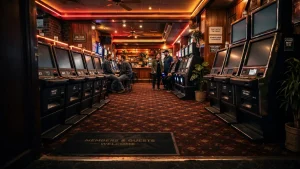
When I read “pokies parlour”, I picture a place you can physically enter, not a website with a casino-themed name. The wording can blur those two ideas, especially when a page uses “casino” for both. But a gaming venue and an online service are different things: one is a location; the other is something accessed through a device.
That distinction sounds obvious until advertising starts mixing the terms. A website can borrow the language and look of a real casino without being a building you can visit. And a physical casino does not become an online casino just because it has a website. The name alone tells you little about what kind of service you are looking at.
In this context, a parlour or casino means a physical venue where gambling takes place. You go there in person. The venue has an address and operates as a place, rather than as a web page or app. “Gaming venue” is a useful plain-English description when the word “parlour” feels vague: it keeps the focus on the physical setting.
If you’re exploring online pokies options in Australia for 2026, this list gives you a concise reference to the operators’ stated licensing and any available deposit or payout details. Use those details as a starting point and check the operator’s current terms before playing.
Golden Pokies
Golden Pokies is listed with a Curacao licence; that is the only operator detail available here.
Rollero Casino
Rollero Casino is listed under Curacao Gaming Control Board licence OGL/2023/176/0095, held by Hollycorn N.V.
Uptown Pokies
Uptown Pokies is listed as operating since 2017 under a Curacao licence, with a minimum deposit of A$20.
SkyCrown
SkyCrown is listed under a Tobique Gaming Commission licence. Its stated payout times are around 10–15 minutes for crypto and 1–5 days for fiat, and its minimum deposit is A$30.
Thor Casino
Thor Casino is listed under a Curacao licence issued to Versus Odds B.V. by Antillephone N.V.; its minimum deposit is EUR 20.
SpinsUp
SpinsUp is listed under Curacao Gaming Control Board licence OGL/2023/174/0082, held by Dama N.V.
7Bit Casino
7Bit Casino is listed as a Curacao-licensed casino operated by Dama N.V.
Roby Casino
Roby Casino is listed with a Curacao eGaming licence held by Roby Games Ltd.
Lucky Dreams
Lucky Dreams is listed with a Curacao licence and a minimum deposit of A$20 when using POLi.
House of Pokies
House of Pokies is listed with an international iGaming licence, though the jurisdiction is not named in the available information. Its stated PayID payout time is 1–24 hours, and the minimum deposit is A$30, or A$10 when using PayID.
I used to skim past that difference. If a page had a familiar casino name and a polished design, I treated it as though it represented the venue itself. That was a bad shortcut. A real-world property and a digital service can use similar wording while remaining separate businesses, offerings or experiences. You have to identify which one the page is actually talking about before taking any of its claims at face value.
A physical casino has a presence you can locate. An online service exists through a site or app. That basic contrast matters more than whether the page uses words such as “parlour”, “casino” or “club”. Those labels are not interchangeable proof of a physical address, and a web design that imitates a venue does not turn the service into one.
Simple distinction.
All major Australian casinos operate around the clock. That describes their operating hours as physical venues. It doesn’t mean every part of a property, every service or every activity is necessarily available in the same way at every moment. Nor does a venue’s schedule tell you anything by itself about a similarly named website.
I find it useful to ask what the sentence is describing. If it says a casino is open, is it talking about a building that people attend, or a service that can be reached online? The wording may not make that clear. A statement about a venue’s hours should not be carried across to a digital product just because both use the same brand language.
That is one of those small reading habits that saves confusion. I once took a general “open all day” claim as if it applied to everything attached to a casino name. It might only refer to the venue. Read the subject of the sentence, not just the bold phrase.
“Pokies parlour casino” can sound like one neatly defined category, but people may use those words loosely. They might mean a physical casino with a gaming area, another kind of gaming venue, or an online page trying to sound like a place. The phrase alone doesn’t settle which meaning is intended.
So I would separate the claim into two parts: what is being offered, and where it exists. If the claim describes a place to visit, look for the venue itself and its physical identity. If it describes play through a screen, that is an online service, even if the page uses a photograph of a casino floor or calls itself a parlour.
This isn’t about judging a venue by its décor or deciding whether one kind of experience is better. It is just a way to avoid treating two unlike things as one. A physical location has an in-person setting; an online service is delivered digitally. Similar names do not erase that difference.
There is no need to make the distinction more complicated than it is. “Parlour” may be part of a venue’s description, but it does not automatically tell you that the page in front of you represents a physical site. Equally, a venue’s existence does not make every online service using related wording part of that venue.
Keep the categories separate. That’s the point.
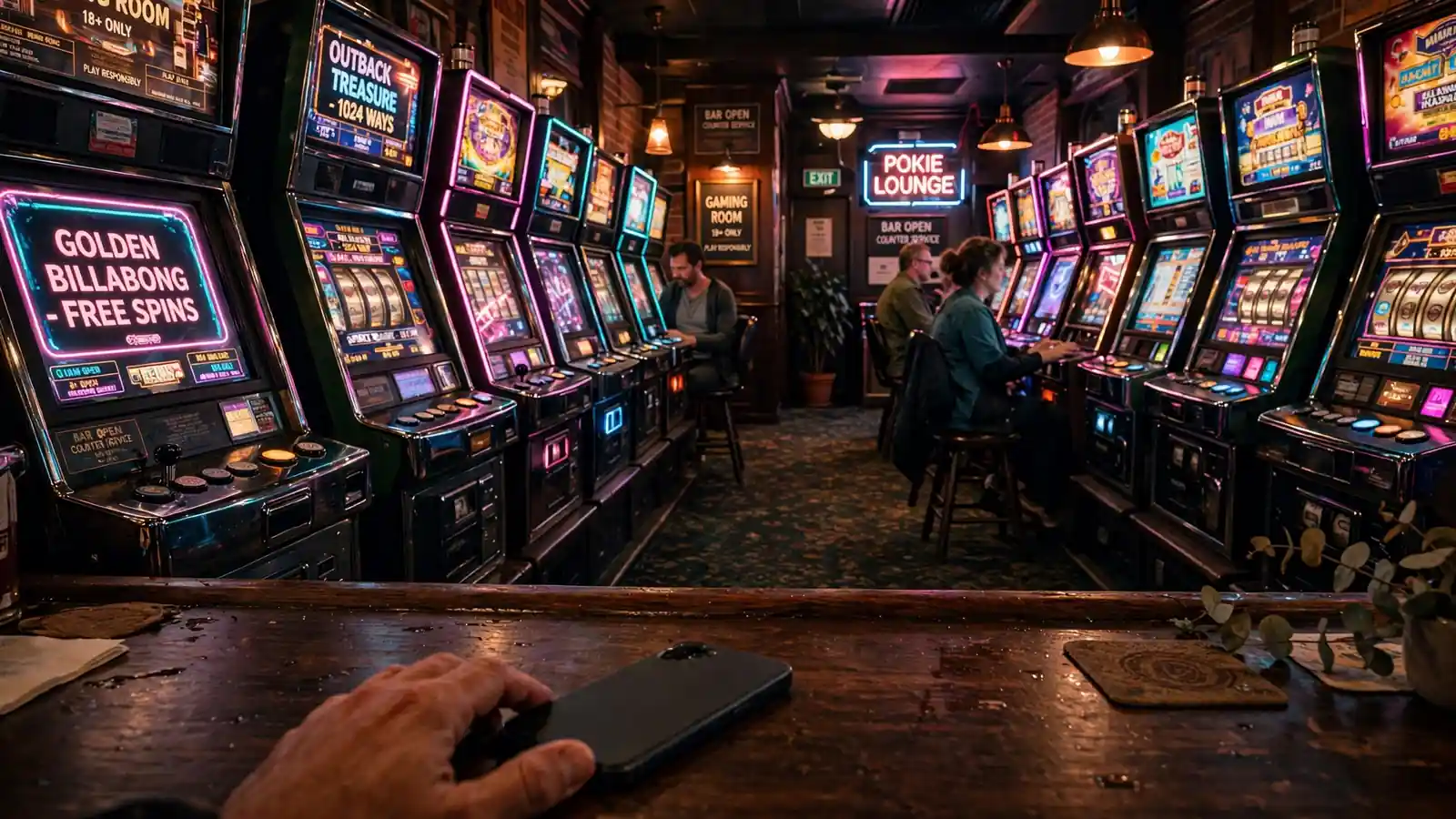
When people say “parlour pokies”, they are usually pointing to the gaming-machine area inside a casino, rather than naming a separate kind of game. “Parlour” gives the phrase a room-or-floor feel; “pokies” is the familiar Australian term for electronic gaming machines. In a casino context, it means the machines available to play on the venue’s gaming floor.
I used to read labels like this as if they promised a distinct format. They don’t. The wording alone tells you little about the machines’ features, the room’s layout or what a visit will be like. It is a loose way to describe casino pokies, not a reliable specification.
There is a useful national figure for scale: casino venue licences endorse 3,308 gaming machines installed across Australia. That count refers to machines installed in casinos and recorded against venue licences. It does not mean every casino has the same number, nor does it describe the mix of machines at any one property.
That distinction matters when you see broad descriptions. A page may use “parlour” to evoke a dedicated area, but the word itself does not confirm that a venue has a separately named parlour, or that its machines differ from other casino gaming machines. I’d treat it as a description, then look for concrete details about the venue if those matter to me.
The count also isn’t a measure of how many machines are available at a particular moment. It is a national total, not a live inventory or a promise about a specific floor. Plain numbers, narrow meaning.
Australia’s gambling venues are not all concentrated in the capitals, but a broad national count needs a little care. A specialist gambling directory reports more than 20 full-scale casinos across all eight states and 147 cities with gambling facilities. Those are counts from that directory, not a permanent map: venues open, close or change status, and “gambling facility” covers more than a casino. I would treat the figures as a snapshot, not as a promise that every location still has the same options.
The same directory identifies Sydney, New South Wales, as the country’s largest gambling city, listing 11 gambling facilities there. That gives a sense of scale, but it does not mean Sydney has 11 casinos. The distinction matters when you’re trying to find a particular kind of venue rather than any place where gambling is available.
The Northern Territory figures in that directory are narrower: it lists three casinos across three cities, and names Alice Springs as the city with the most casinos in the territory, at one. That wording is a useful reminder to check what a count is actually counting. A city can be prominent in a regional list without having a cluster of casinos.
Located at 93 Barrett Drive, Alice Springs, NT 0870.
Located on Broadbeach Island, on the Gold Coast.
Located on Country Club Avenue, Prospect, in Meander Valley.
There are a few concrete addresses and place descriptions worth checking against the venue’s own current information. Lasseters Casino is listed at 93 Barrett Drive, Alice Springs, NT 0870. Jupiters Gold Coast Casino & Hotel is located on Broadbeach Island, on the Gold Coast. Country Club Casino is listed on Country Club Avenue, Prospect, in Meander Valley. These details are more useful for planning than a generic “near me” label, but they still need a fresh check before you set out. Names and listings can change.
For me, the practical approach is to start with the city or region, then confirm the venue’s own location details and whether it is operating as the place I expect. Australia’s casinos are regulated by their state or territory, and each property operates under a licence from its local jurisdiction. That means a national list is only a starting point; the local authority and venue information matter for the specific property.
I would also be wary of lists that put casinos, clubs and other gambling facilities together without explaining the categories. A count can be technically accurate and still answer the wrong question. If you want a casino, make sure the entry actually identifies one, rather than assuming every gambling venue is a casino. A map pin is not enough.
The place is only half the check. I’ve learned not to rely on a directory’s old address or a tidy national total when a venue’s own details can confirm the actual location. Check the wording, check the address, and keep the distinction between a casino and a broader gambling facility in view. Small detail. Big difference.
I’d sort out the basics before setting off, rather than treating a casino visit like walking into any bar. The minimum age for entry to a casino in Australia is 18. You’ll also need valid photo ID at major casinos, so bring it even if you look well over the threshold. Being old enough does not, by itself, tell you what else a particular venue expects at the door.
Check the venue’s own entry information before you travel. Conditions can differ, and details such as access arrangements or dress expectations are venue-specific. If the information is unclear, contact the venue directly. That is less exciting than trusting a polished page, but it can save a wasted trip.
“VIP” sounds like a shortcut; in practice, it is a label, not a guarantee of entry. It may refer to a particular area or access arrangement, but the wording alone does not establish who can use it or what is required. I would confirm with the venue whether the area is open to visitors and whether any separate conditions apply. Don’t assume that asking for VIP access changes the standard age rule.
I’ve learned not to confuse a grand entrance with a promise that every part of a venue is available to every visitor. A gaming venue can have different spaces and its own entry process. Check the specific place, take your ID, and be ready to follow its stated conditions. If you can’t verify the details beforehand, don’t build your plans around an assumption.
A little checking first. Less guesswork.
I used to treat a confident review as if somebody had checked every detail for me. That was lazy on my part. A polished page can sound specific while telling you very little about the venue behind it. Now I separate what the reviewer says they experienced from what can be checked independently.
The first thing I look for is a clear description of the place being reviewed. Does the writer name a particular venue and explain what they actually saw, or could the same paragraphs be pasted onto any casino? Broad praise such as “great atmosphere” is hard to assess without detail. A useful account gives you something concrete to weigh, while still making clear that one person’s visit is not everyone’s experience.
I also read the language around the word “parlour” carefully. It may be used loosely, so I don’t assume the label tells me what kind of venue I’m looking at. The review should identify the property and distinguish its own observations from general statements. If that line is blurry, I take the claims with a pinch of salt.
The strongest factual check is not another review repeating the same description. Australia regulates casino properties at state and territory level, and each property operates under a licence from its local jurisdiction. So if a review makes a confident claim about a casino’s licensed status, I want to know which property it means and whether the relevant state or territory authority supports that claim.
That doesn’t mean a review must become a legal document. It does mean that vague wording deserves less trust. “Fully approved” or “official” can sound reassuring, but the reviewer should say what those words refer to. A licence claim is not established just because it appears in a badge, a photograph, or several pages that seem to echo one another.
I’ve fallen for repetition before. Several sites using similar phrases can look like independent confirmation, even when they may simply be repeating the same claim. I now ask whether the review gives a named venue, explains the basis for its statements, and points to the relevant jurisdiction rather than leaning on its own confident tone.
Personal detail can help, but it is not proof of every claim. A writer may describe what they noticed during a visit; that does not automatically verify the venue’s official status or establish that every reader will have the same experience. I look for a sensible boundary between “this is what I saw” and “this is true about the property.”
I’m wary of reviews that present a verdict without showing how they reached it. If the page offers only sweeping praise, or repeats promotional language without explaining what it means, I treat it as a sales pitch wearing a review’s jacket. That is not the same as saying every positive account is false. It is a reason to ask for more than adjectives.
A review can still be useful as a starting point. I just don’t let its tone do the checking for me. Identify the venue, test factual claims against the relevant jurisdiction, and keep personal impressions in their proper place. Less glamour. More checking.
“Sign up” sounds like a small first step: create an account, accept a welcome offer, see what happens. “No deposit” sounds even easier. I used to read those labels as if they described the whole deal. They don’t. They are advertising phrases, not evidence that an online casino can lawfully serve people in Australia.
The legal question comes before the offer. Under the Interactive Gambling Act 2001, operators cannot provide real-money online casino games to people physically located in Australia. That covers casino-style games such as slots, poker and table games. Calling an offer a sign-up bonus, a welcome reward or a no-deposit bonus does not change what the service is or make it permitted.
That distinction is easy to miss when a page puts the reward in large type and the conditions in small print. I’ve been drawn in by the headline before, then found myself trying to work out what I had actually agreed to. The offer looked simple. The terms weren’t.
“No deposit” describes one part of the pitch: the page says you do not need to pay in to receive or access something. It does not establish that you can withdraw winnings, that there are no conditions, or that the service is lawful for Australians. A sign-up offer may also be tied to account rules, eligibility requirements or restrictions on how a reward can be used. Those details belong in the terms, not in the headline.
Read the offer as a claim to check, not as a promise. Look for what action is required, whether the reward is cash or something else, what conditions apply before any withdrawal, and whether the terms can be changed or withdrawn. If those points are hard to find or written unclearly, that is a reason to pause. It is not a puzzle you need to solve quickly because a banner is urging you to act.
Even a page that spells out its conditions clearly has not answered the main question. A well-presented offer can still be attached to a service that is prohibited from providing online casino games in Australia. A bonus page is not a licence, and a polished terms page is not a regulatory approval.
The Australian Communications and Media Authority, or ACMA, is the federal regulator responsible for enforcing the Interactive Gambling Act and monitoring compliance with federal interactive-gambling laws. It can ask Australian internet providers to block websites that supply prohibited interactive gambling services or advertise them to people in Australia.
Prohibited Services
Under the Interactive Gambling Act 2001, operators cannot provide real-money online casino games to people physically located in Australia.
That matters because an offer can be part of the advertising for a service, not just a private perk for someone who already has an account. A sign-up message that invites Australians to join may itself promote a prohibited service. Changing the label on the promotion does not settle the legal issue. “Welcome” is still advertising language when it is used to attract customers.
I would not treat the presence of detailed terms, a support chat or a confident claim about an operator’s status as proof that the offer is lawful. Those things tell you how the site presents itself. They do not replace the rules that apply to the operator.
When I see a no-deposit claim, I separate the sales message from the facts it would need to establish. The sales message says there is a reward for joining. It might use words such as “free,” “instant” or “exclusive.” None of those words answers whether the operator may provide online casino games to customers in Australia.
Then I look for what the headline is asking me to overlook: the conditions attached to the reward, what personal information the sign-up process requests, and whether the site explains the offer in plain language. I don’t assume that a reward is usable just because it appears on the front page. And I don’t enter personal details simply to uncover terms that should have been clear before registration.
There is a limit to what checking an offer can establish. You can understand its wording and still have no basis to treat the underlying service as lawful. That is the key distinction I wish I had made earlier. The bonus might be described as low-risk or effortless; those are sales descriptions, not legal protections.
If a promotion is directed at Australian users, I’d take the invitation itself seriously rather than letting the “no deposit” wording distract me. ACMA’s role is to enforce the federal framework, including action around prohibited services and their advertising. A bonus does not create an exception to that framework.
So read the fine print, but don’t stop there. The terms explain the offer’s conditions; they do not establish permission to provide the service. That’s the part the banner won’t tell you.
“Free” is one of those words I learned to distrust. A page can dress up a chip or spin as a gift, but the label alone tells you neither what conditions apply nor whether the service is permitted to operate in Australia. It is promotional language, not proof of a safe or lawful offer.
That matters even when the offer is described as free play rather than a cash deposit. Online casino-style games, including slots and table games, are prohibited interactive gambling services when provided to people in Australia. Calling a spin free does not change the nature of the service behind it. Nor does a free chip turn a prohibited online casino into a lawful one.
ACMA Enforcement
Since November 2019, the Australian Communications and Media Authority has requested the blocking of more than 1,455 illegal gambling and affiliate websites.
I used to read the headline and assume the fine print would be the only catch. That was backwards. First ask what the offer is trying to draw you into; then treat its terms as part of the promotion, not as evidence that the service has Australian approval. “No purchase needed” or “free to try” may sound reassuring, but neither phrase establishes that an operator can provide online casino games here.
There is also a difference between a promotional claim and an enforcement record. The Australian Communications and Media Authority (ACMA) enforces the Interactive Gambling Act 2001 and can act against operators that provide or advertise prohibited online gambling services. It has requested website blocking as part of that work. ACMA reports that more than 1,455 illegal gambling and affiliate websites have been blocked since November 2019 following enforcement actions.
That is a substantial enforcement history, but it does not let me declare a particular offer lawful or unlawful just from its wording. It does show why a glossy page, a friendly “gift” label, or a polished set of terms should not be mistaken for regulatory evidence. Free chips and free spins are still advertising claims to scrutinise.
The reported number of services that have left the Australian market since enforcement began in 2017 is not consistent across the available accounts: one gives more than 210, while another says over 190. Those figures disagree, so I would not quietly choose one and present it as settled. The broader point remains: enforcement has had consequences for services operating in this area.
If you encounter an offer framed as a free spin or a complimentary chip, separate three things in your mind: the promotional wording, the conditions attached to it, and the legal status of the underlying service. Only the first is obvious from the headline. The second requires careful reading, and the third cannot be proved by an offer page calling itself “free”.
That distinction is easy to miss when the language is designed to make a decision feel effortless. I have made that mistake. A free label is not a permission slip, and it is not a regulator’s finding. Just marketing.
A “parlour bonus” can sound like a simple extra attached to a gaming venue. I’ve learned to pause at that kind of wording. It tells you an incentive is being advertised; it does not tell you who is offering it, what service it relates to, or whether that service is permitted in Australia.
That distinction matters when a promotion sits beside online casino-style games. A polished page can borrow the language of a physical venue and make an offer feel familiar. But calling something a pokies parlour bonus doesn’t make an online casino a licensed Australian venue, and an incentive cannot change the legal status of the service behind it.
I used to read “bonus” as a sign that someone had made an offer worth considering. Now I read it as a prompt to identify the operator and the underlying service first. Is the wording about an in-person venue, or is it trying to draw you towards online slots or other casino-style games? Those are not interchangeable things. The label alone won’t answer that.
In Australia, the Interactive Gambling Act 2001 prohibits operators from providing real-money online casino games to people located here. The Australian Communications and Media Authority (ACMA) is the federal regulator responsible for enforcing that law and monitoring compliance with federal interactive gambling rules. So if an online service advertises an incentive, the existence of the offer is not evidence that the service is allowed to provide those games.
“Extra value” is advertising language, not a regulatory finding. Nor does a bonus prove that a venue is connected to a real, licensed casino or that the promotion’s terms match what you might expect from an in-person gaming venue. I’ve seen how quickly a catchy phrase can do the work of making a claim feel settled. It isn’t settled.
Keep the questions plain: what is being offered, by whom, and is it an in-person venue or an online gambling service? Don’t let the bonus wording answer those questions for you. If the offer is tied to online casino play, treat the incentive as an inducement to look more closely—not as reassurance, endorsement or proof of permission. ACMA’s role is enforcement; a promotion has no power to grant an operator permission under the law.
That’s the useful distinction. A bonus can describe the pitch. It cannot certify the service.
I’ve learned not to treat a page loading as proof that the service behind it is legitimate. A site can open, take account traffic or appear at a different web address without becoming an Australian-licensed online casino. Those are signs of access, not evidence of permission.
That distinction matters because the Interactive Gambling Act 2001 prohibits operators from supplying online casino-style games to people in Australia. The category includes pokies and other slot games, as well as poker and table games such as blackjack and roulette. A site’s own claim that it is “available to Australians” cannot change that legal position. I used to read a working link as a kind of endorsement. It isn’t.
Australian internet providers may be required to block access to websites offering prohibited interactive gambling services or promoting them. The Australian Communications and Media Authority (ACMA), which enforces the federal interactive gambling rules, can ask providers to restrict access. ACMA has also taken blocking action involving illegal gambling services and alternate addresses associated with Fair Go.
A specialist gambling-site review has described blocking as affecting which domains resolve through Australian internet providers, while replacement addresses may appear later. That is a report about how access can shift, not proof that any new address is authorised. A changed ending, a fresh link sent through a message, or a page that returns after an earlier one stopped loading tells you nothing reliable about the operator’s legal status.
The practical effect is confusing. One address may fail to load on your connection while another page appears to work. That difference can be caused by domain-level blocking and the use of alternate addresses; it is not a trustworthy test of whether the underlying service is lawful. Nor does a familiar design, a polished account page or an Australian-facing welcome message establish approval.
Don’t chase the next address. That’s the trap.
People also look for online pokies they can try without paying. The word “free” sounds like it removes the risk, but it does not tell you who operates the site, what happens to account information, or whether the service is being presented in a way that complies with Australian law. A free-play label is still just a claim made on a page.
I wouldn’t use a free mode as a shortcut to deciding that a site is safe or permitted. It can sit alongside an account funnel, promotional messages or other features, and the label alone doesn’t explain the service as a whole. I’ve made the mistake of judging a site by its front door. The front door is not the paperwork.
If you want to check a claim, look beyond the site itself. ACMA publishes information about its role and enforcement activity at acma.gov.au, and the legislation is available through the Federal Register of Legislation. An operator’s own statement, a search result, or a domain that currently resolves is not a substitute for those sources.
This is not a guide to finding a working address or getting around a block. Blocking is part of how Australia enforces restrictions on prohibited online gambling services. An alternate domain does not undo that restriction; it can simply make the situation look less clear than it is.
When I see a page advertise online play or “free” access, I separate two questions: can I reach it, and does that prove it is allowed to offer the service here? The first may change from one address to another. The second cannot be answered by the address bar.
“Real money” tells you what a service says it offers; it does not tell you whether that service can lawfully offer it to people in Australia. I used to treat a polished site and a confident claim as signs that someone had checked the rules. That was a poor shortcut.
The legal distinction matters. Australian casino properties operate under licences issued by their state or territory. That licensing system does not give an online casino permission to offer real-money games to people physically located in Australia. Under the Interactive Gambling Act 2001, operators providing online casino-style games to customers here are acting unlawfully. That covers slots as well as online poker and table games.
So a claim that you can play for cash is not proof of Australian authorisation. Nor does a service’s branding, payment process or account screen change the legal position. Those details may describe how the operator presents its offer; they do not establish that the offer is permitted in Australia.
I’ve learned to separate a claim from evidence. If a site says “Australian casino” or presents itself as a local option, look at what the wording actually proves. A reference to an Australian audience or local players is not the same as a licence from an Australian state or territory. And a land-based casino’s local licence should not be mistaken for approval of an online service using similar language.
That’s the limit. Real-money wording can describe the product, but it cannot settle its lawful status here. I wouldn’t read confidence into the sales pitch. The law is the harder test.